Short answer
Ladakh is a cold desert. Summer days in Leh are warm and dry, around 20 to 30 degrees, with cold nights. Winter days stay near or below freezing and nights fall far lower. Pangong, Tso Moriri and the passes are significantly colder than Leh, and the sun at altitude is very strong in all seasons.
On this page 11 sections
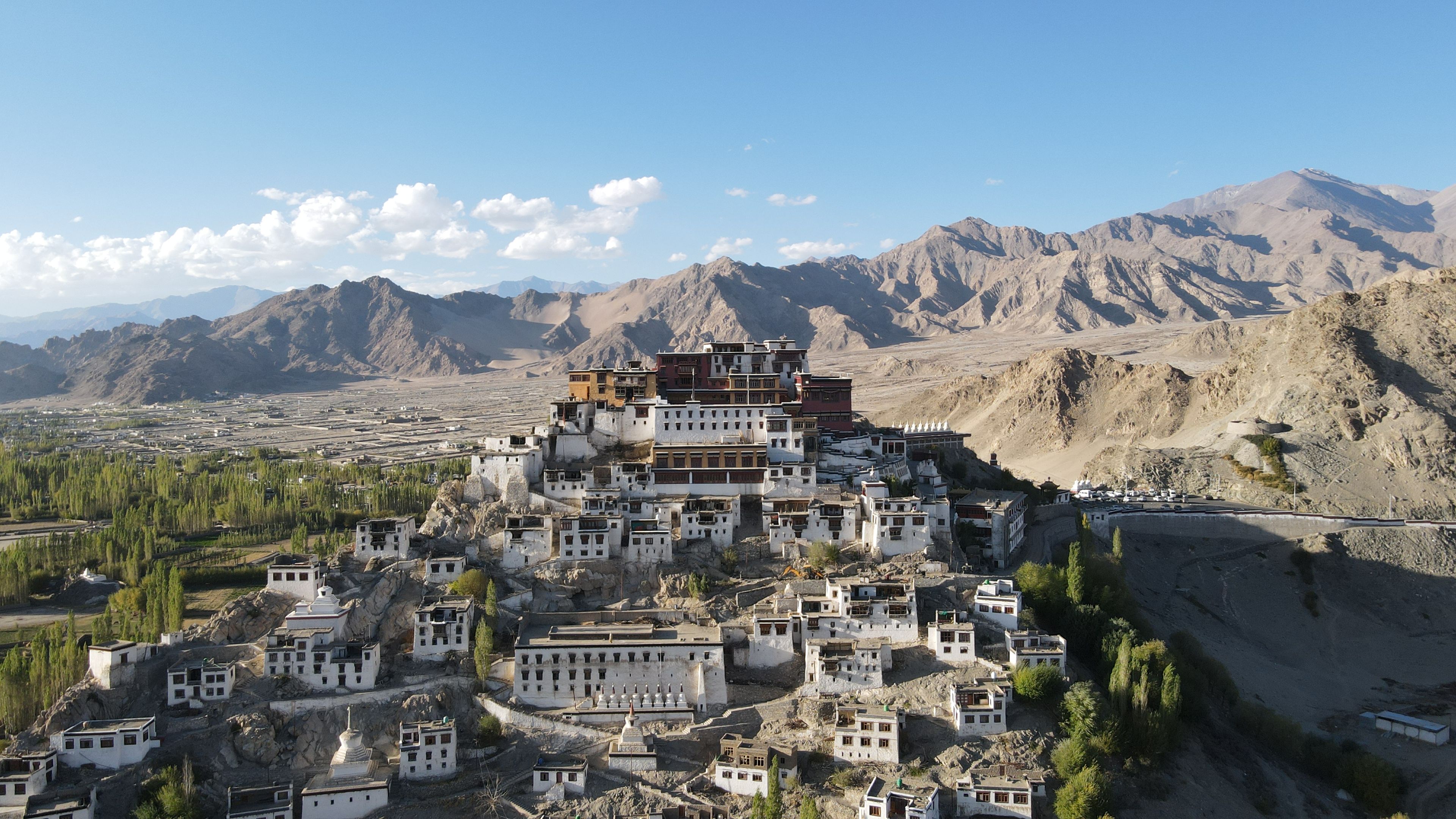
Ladakh sits in the rain shadow of the Himalaya. It is a high-altitude cold desert, where the sun is fierce, the air is thin and dry, and temperatures change dramatically between day and night. Those figures below are approximate, and they vary from year to year and place to place. They are meant as a planning guide, not a forecast.
How to think about Ladakh's weather
Three things shape the climate. First, altitude: every few hundred metres you climb, the air gets colder and thinner. Second, dryness: Leh gets very little rain or snow in a year, so skies are clear and the sun is strong. Third, the sun and shade difference: it can feel warm in the sun and cold in the shade, and temperatures drop sharply after sunset.
Month by month in Leh
| Month | Typical day | Typical night | Notes |
|---|---|---|---|
| January | Around freezing or below | Far below freezing | Deep winter; most services closed |
| February | Around freezing | Far below freezing | Snow leopard season |
| March | Cool, a few degrees above zero | Below freezing | Slowly warming |
| April | Cool to mild | Below freezing | Tourism begins |
| May | Mild, 15 to 20 degrees | Around freezing | Roads open |
| June | Warm, around 20 to 25 degrees | Cold, around 5 to 8 degrees | Season begins |
| July | Warmest, around 25 to 30 degrees | Cool, around 8 to 12 degrees | Peak; rain on approach roads |
| August | Warm, around 25 to 28 degrees | Cool | Peak; landslide risk |
| September | Mild, around 20 to 24 degrees | Cold, around 3 to 6 degrees | Clear and golden |
| October | Cool, around 10 to 15 degrees | Below freezing | Quiet |
| November | Cold, a few degrees above zero | Far below freezing | Season ends |
| December | Around freezing or below | Far below freezing | Deep winter |
These are rough ranges. Actual days can be hotter or colder, especially in the sun.
How other places compare with Leh
- Nubra Valley is a little lower and warmer in summer, with days in the high 20s, but still cold at night.
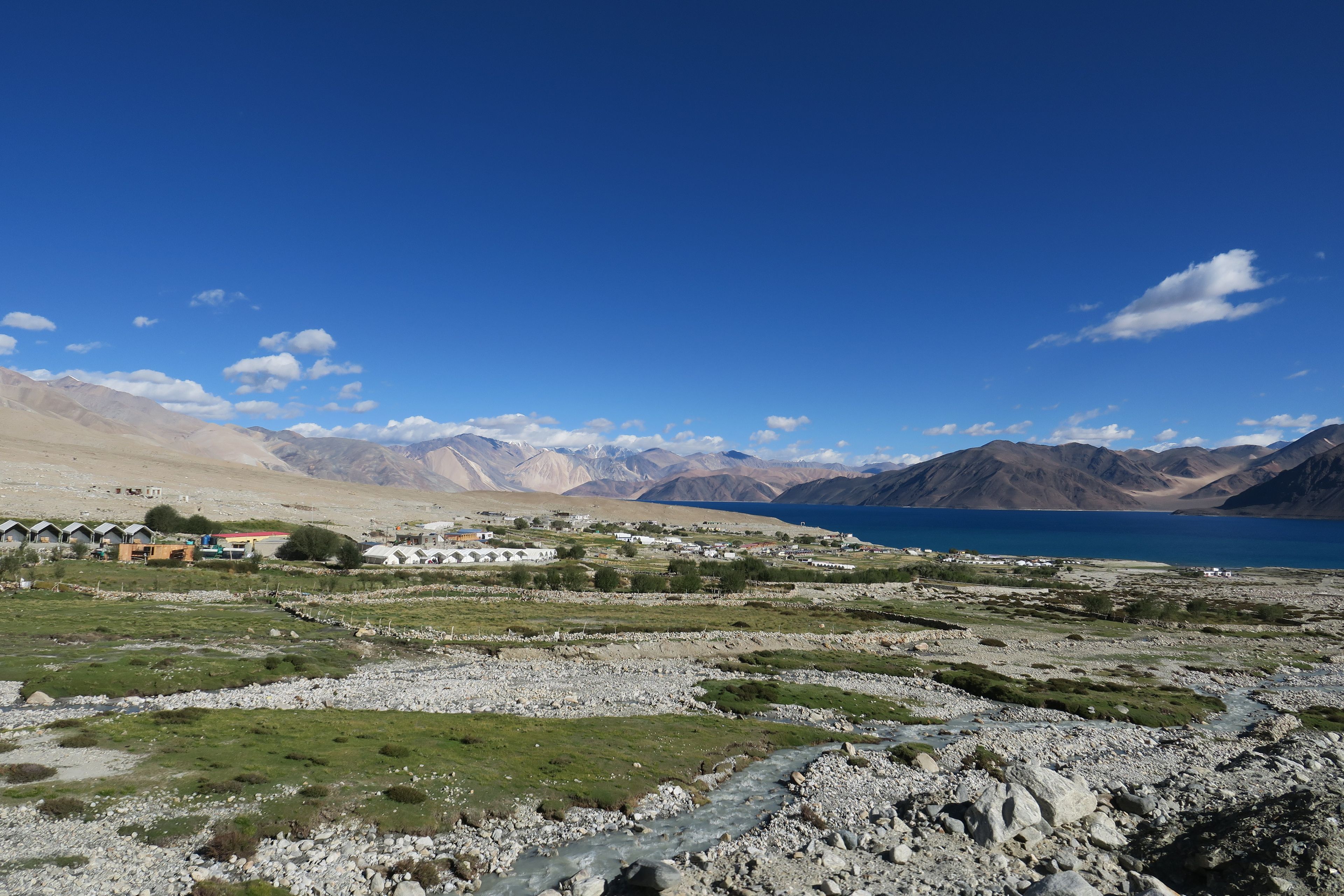
- Pangong Tso is much colder. Even in July, nights can be near freezing, and winds on the lake are strong.
- Tso Moriri and Hanle are colder still, with frost on summer mornings.
- Khardung La and Chang La are often at or near zero, with snow and sharp wind.
- Kargil and Dras are cold, with Dras known as one of the coldest inhabited places in India.
- Zanskar has a short summer and a long, deep winter.
Sun, UV and dryness
At 3,500 metres, UV is much stronger than at sea level. Sunburn comes fast, even on cloudy days, and snow glare is intense on passes. Use sunscreen, lip balm and sunglasses with UV protection. The air is very dry, so skin cracks, lips peel and noses bleed in some people. Drink water throughout the day, even when you do not feel thirsty.
Rain, snow and storms
Leh receives very little precipitation in a year. But Ladakh is not immune to extreme weather. Sudden thunderstorms and cloudbursts can happen in summer, especially in July and August. In August 2010, a cloudburst caused devastating floods in Leh. The approach highways from Manali and Kashmir are more prone to rain than Ladakh itself. Snow can fall on the high passes at any time of year, and early snow in autumn can close routes.
Wind
Afternoon winds are common, especially around Pangong and in open valleys. They make it feel colder and can kick up dust at Nubra. A windproof jacket is more useful than a thick coat.
What to pack by season
June to September: thermal base layers, a fleece, a light down jacket, a windproof shell, a sun hat, a warm cap, gloves, sunglasses, sunscreen, lip balm, comfortable shoes and trousers, and a scarf or buff. Evenings and nights are cold, and Pangong needs more.
May and October: all of the above, plus a heavier jacket, warm socks and a hot water bottle if you feel the cold.
Winter: serious cold-weather gear, including insulated boots, multiple layers, balaclava, heavy gloves and a proper sleeping setup. Do not attempt winter travel without specialist advice.
A typical summer day
In June to September, mornings start cold and bright, with frost on the ground in some places. By nine or ten the sun is warm, and by midday you may be in a T-shirt in the sunshine and a jacket in the shade. Afternoons can bring wind and dust, particularly on open plains, and clouds sometimes gather over the high passes. After sunset, the temperature falls quickly, and by eight or nine you will want your down jacket. Because of this pattern, drivers like to cross passes in the morning and keep afternoons for arriving at camps.
Winter notes
In winter, Leh's daytime temperatures hover around or below freezing, and nights can fall to minus 15 or lower in the coldest weeks, with far colder readings at Dras, Zanskar and the lakes. Pipes freeze, many hotels close, and heating is essential. Travellers who come in winter should expect early dark, very short days and plans that depend on road and flight conditions. If you are curious about winter, talk to us before planning.
Weather and your plan
Weather affects passes, flights and camps. Morning is usually the best time to cross high passes, because clouds and snow showers build later in the day. A flexible plan with a spare day is the best protection. If the weather turns, we adjust rather than push on.
Plan with us
Read the best time guide for how weather shapes the season, or send us your dates and we will advise on what to pack and which route suits the season.
Practical tips
- Pack layers: thermals, a fleece, a down jacket and a windproof shell, even in summer.
- Use high-SPF sunscreen, lip balm, sunglasses and a hat every day, because UV is intense.
- Expect nights at Pangong and Tso Moriri to be near or below freezing, even in July.
- Carry a refillable bottle, since the dry air dehydrates you quickly.
- Check forecasts for the highways, not only for Leh.