Destination guide
Plan your time in Kerala
On this page 16 sections
- Kerala at a glance
- How the places connect
- When to go
- Houseboats: what to know before you book
- Ayurveda: relaxation or treatment?
- Beaches, hills and wildlife
- Culture and festivals
- Food
- Where to stay
- Getting around
- Safety, rules and responsible travel
- Kerala for different kinds of traveller
- Practical details people forget
- Beyond the main circuit
- Costs to expect
- How we plan Kerala trips
Kerala is a state that looks easy on a map and reveals its subtleties in the planning. The backwaters, the hills and the beaches are all close together, but the roads are winding, the monsoon is serious and each region has its own rhythm. The best Kerala trips are the ones that choose a few bases, leave room for rest and respect the weather. This page is our working guide to planning Kerala: how the regions fit together, which season suits which kind of trip, how houseboats and Ayurveda really work, and what to settle before you ask for a quote.
Kerala at a glance
Kerala is a narrow strip of land between the Arabian Sea and the Western Ghats, about 600 km long and rarely more than 100 km wide. That geography explains its variety: coastal plains with beaches and lagoons, a midland of coconut and rubber, and high ranges of tea, cardamom and forest. The state is known for high literacy, a distinctive cuisine, classical arts such as Kathakali and Mohiniyattam, and a long history of trade in spices.
For visitors, it helps to think in four zones:
- Central Kerala, around Kochi, with its historic port, Fort Kochi, and the gateway airport.
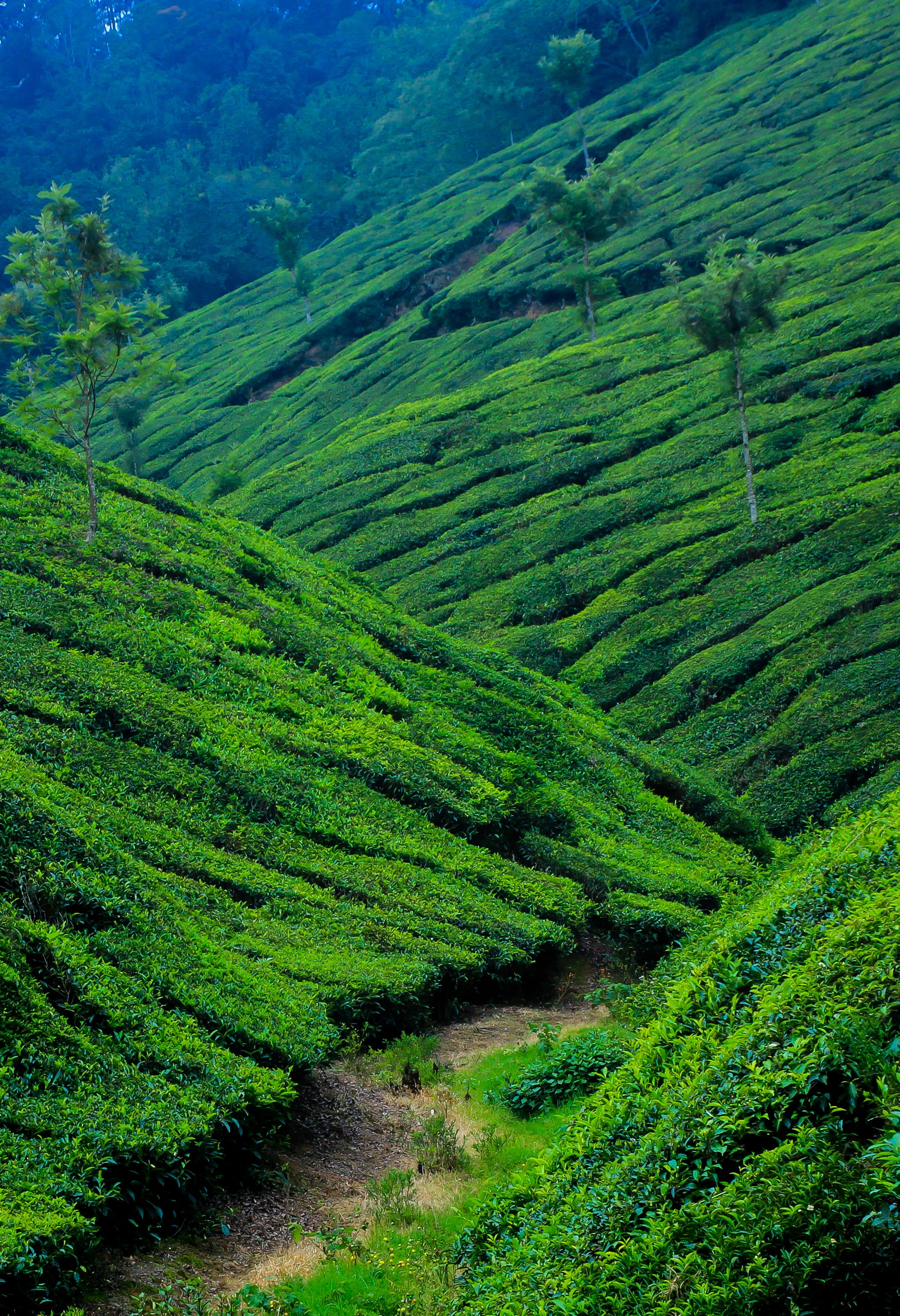
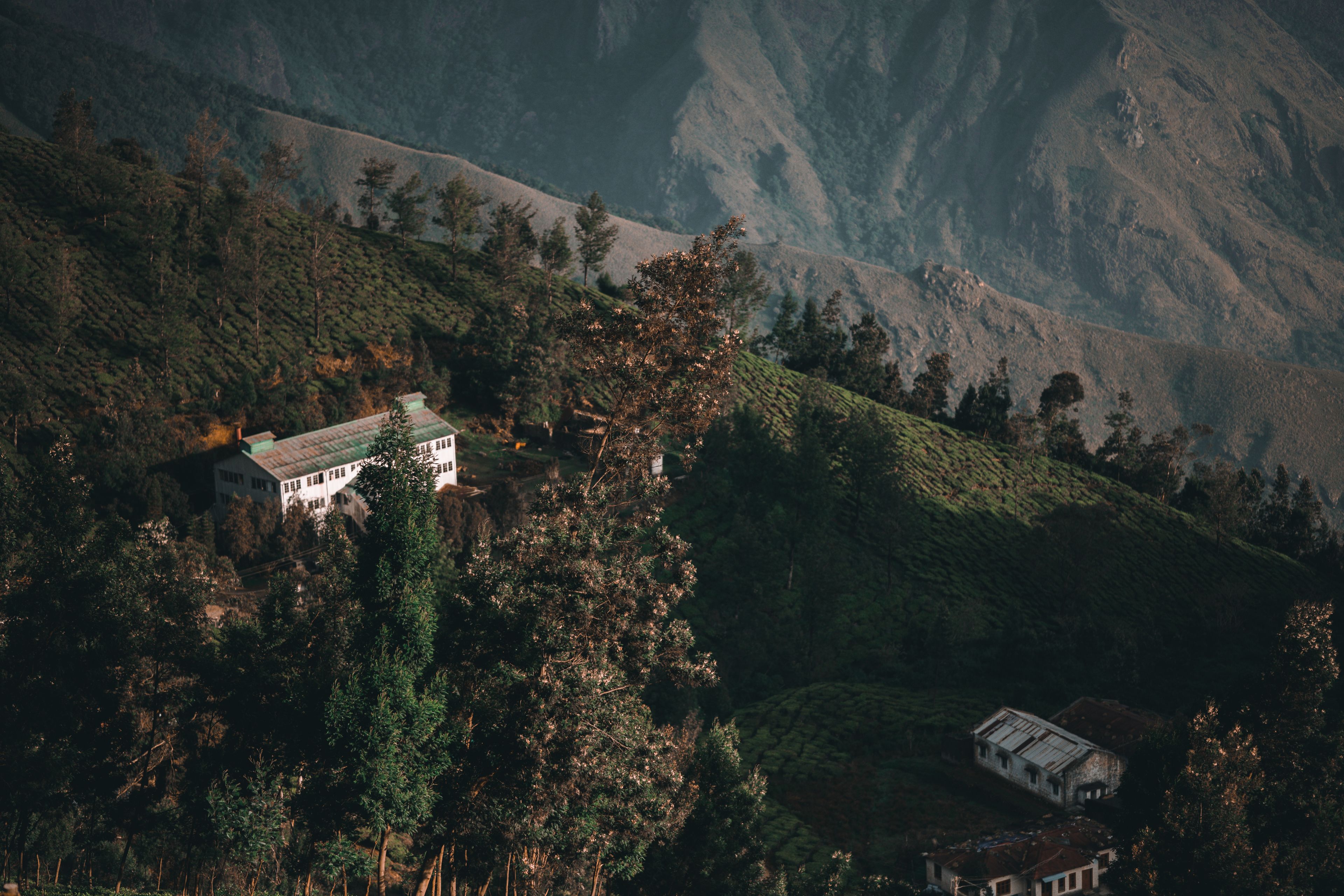
- The high ranges, with Munnar and Thekkady for tea, spices and wildlife.
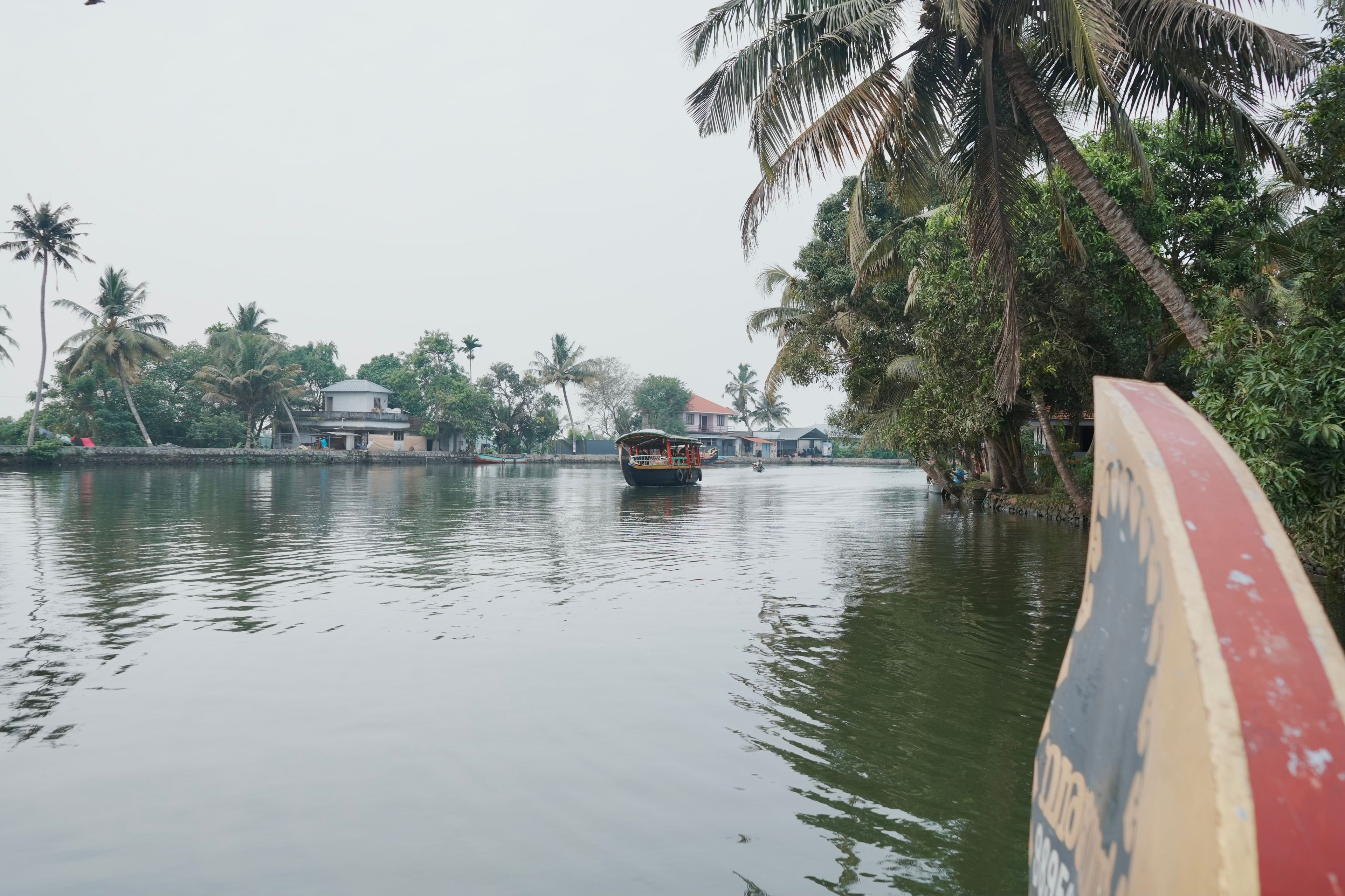
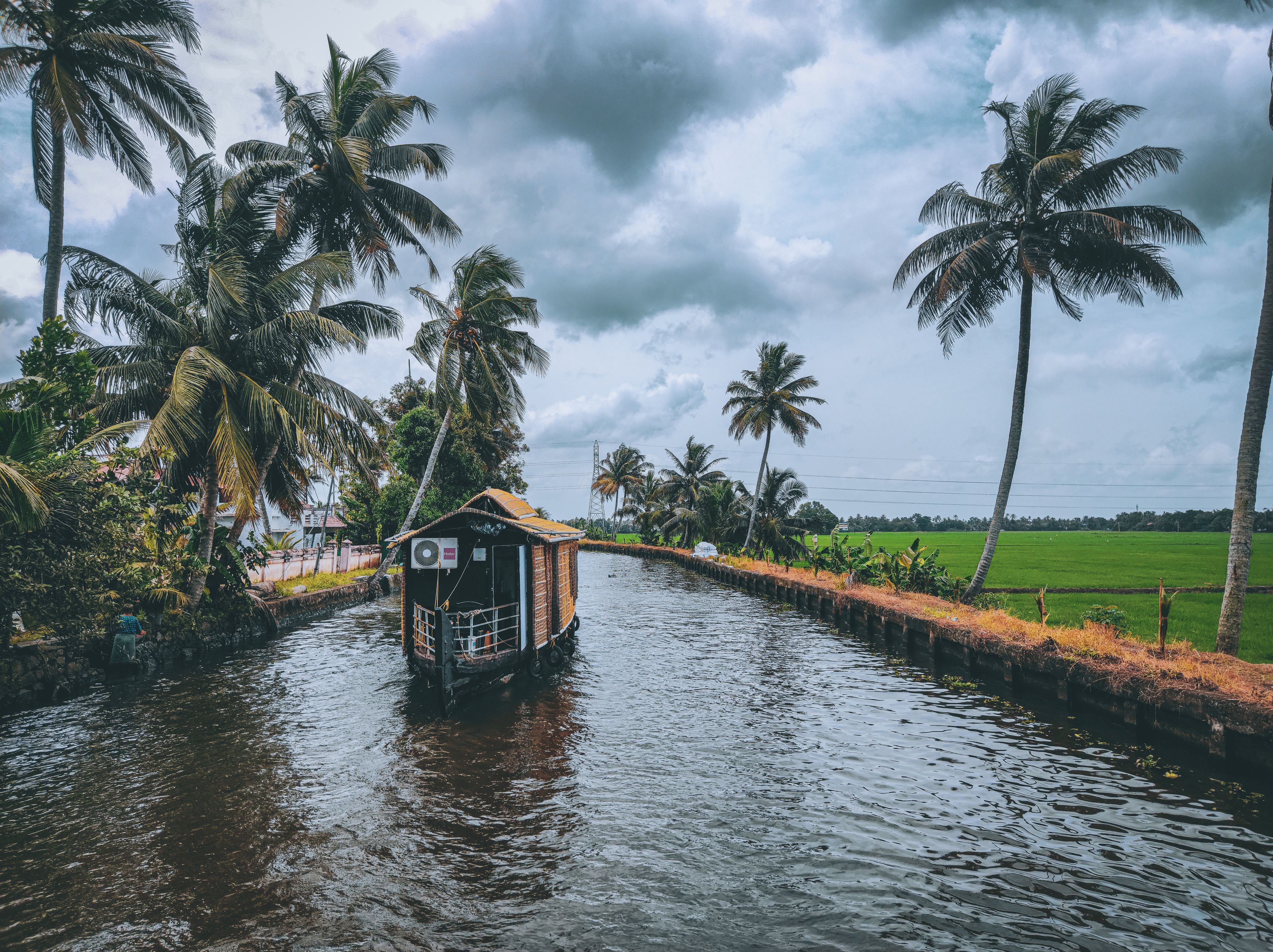
- The backwaters, around Alleppey and Kumarakom, for houseboats and lake life.
- The south, with Kovalam and Varkala for beaches and Thiruvananthapuram for temples and museums.
Wayanad, in the north-east, adds forests, caves and plantations, though access can be affected by the rains.
How the places connect
These road distances are approximate and assume normal traffic. Hill roads are slower than they look.
| Route | Distance | Usual drive time |
|---|---|---|
| Kochi airport to Fort Kochi | about 35 km | 1 hour |
| Kochi to Munnar | about 130 km | 4 to 4.5 hours |
| Munnar to Thekkady | about 110 km | 3.5 to 4 hours |
| Thekkady to Alleppey | about 160 km | 4 hours |
| Alleppey to Kochi | about 55 km | 1.5 hours |
| Alleppey to Kovalam | about 155 km | 3.5 to 4 hours |
| Kochi to Wayanad | about 270 km | 7 hours |
| Kochi to Kumarakom | about 65 km | 2 hours |
A common mistake is to treat these as short hops. A day with two of these legs means seven hours of driving. We usually plan one long drive per day, with sightseeing in the cooler morning.
When to go
| Months | What it is like | Suits |
|---|---|---|
| September to November | Rains easing, green and fresh, scattered showers | Backwaters, lower rates, Onam season |
| December to February | Dry, sunny, cooler nights, peak crowds | Beaches, hills, honeymoons, festivals |
| March to May | Hot and humid on the coast, pleasant in Munnar | Hill stays, quieter beaches, summer breaks |
| June to August | Monsoon downpours, deep green | Ayurveda, waterfalls, resort stays, low prices |
Peak weeks fall between Christmas and the New Year, and around Onam. Our best time to visit Kerala guide goes month by month, and Kerala weather month by month covers rainfall and packing.
Planner's note: If you want hills, backwaters and beach in one trip, aim for December to February. If you are travelling in June to August, choose fewer bases, favour resort stays over road-heavy plans and keep a spare day for rain.
Houseboats: what to know before you book
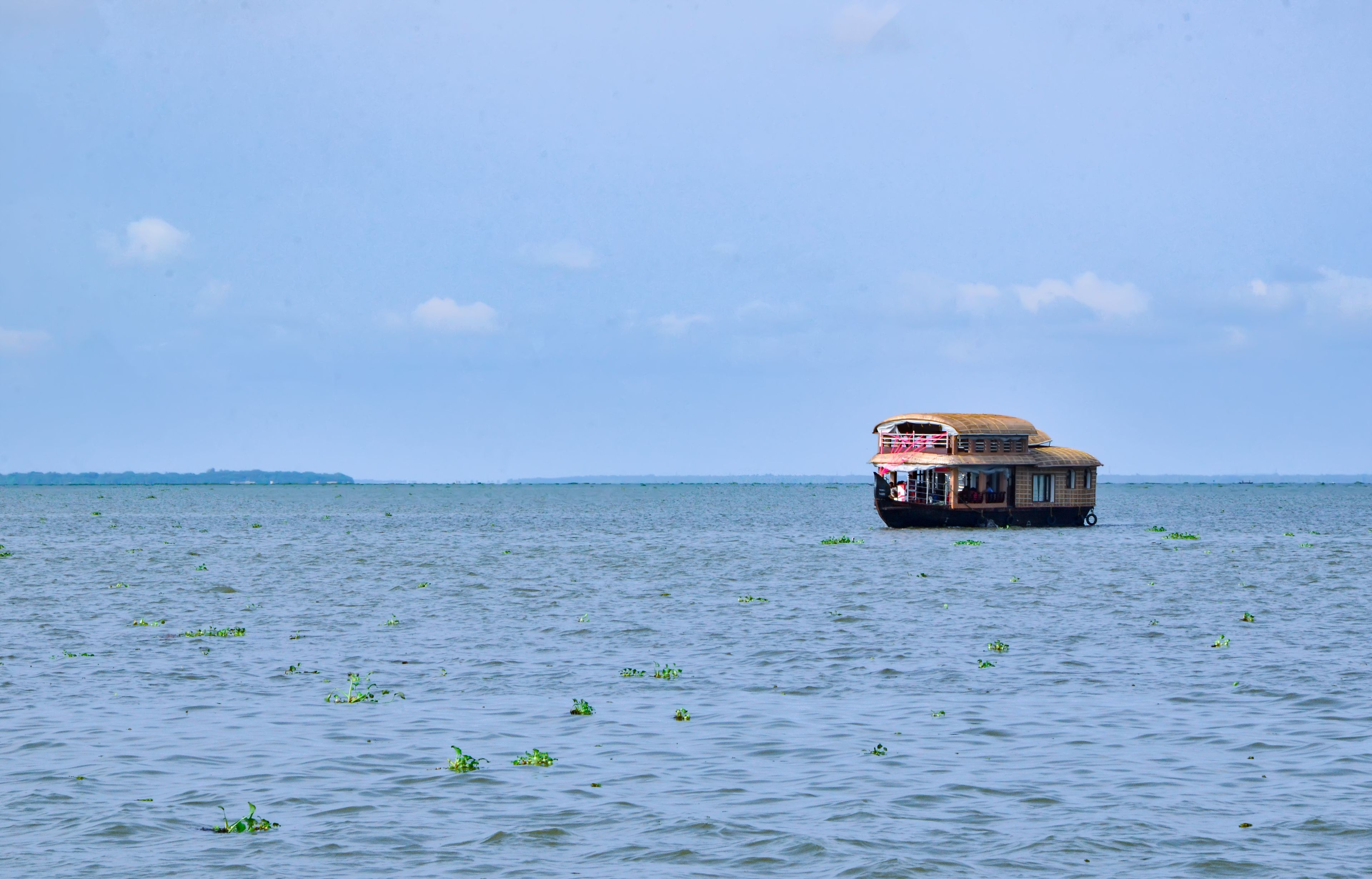
The Alleppey houseboat is Kerala's signature experience, and it can be wonderful or disappointing depending on the boat. The boats are converted kettuvallam rice barges, now fitted with cabins, a kitchen and a crew. A typical trip starts around midday, glides through canals and across Vembanad Lake, and moors in the evening, with dinner on board and an overnight stay.
What matters is quality and regulation. The Kerala Tourism Department classifies houseboats as Diamond, Gold or Silver based on standards, and in 2026 the High Court ordered houseboats without proper waste treatment off Vembanad Lake, with inspections by the Ports Department. That is good news for the lake and a reminder to ask your operator for the registration, classification and pollution-control details. Our houseboat and transport guide explains how to choose.
Ayurveda: relaxation or treatment?
Kerala is the heartland of Ayurveda tourism, with a long tradition of massage, herbal oils and detox programmes. The best centres have a qualified physician who takes a history and prescribes a plan; the weakest are spas with an Ayurveda label. A week-long stay gives time to settle into a rhythm, but even a few days can be relaxing. Treat it as wellness, tell the doctor about health conditions, and be wary of anyone who promises cures.
Beaches, hills and wildlife
Kerala's beaches are quieter and greener than those in many states. Kovalam has a crescent of sand with a lighthouse, and Varkala has dramatic red cliffs with cafes along the edge. Currents are strong in places, so swim at lifeguarded stretches. The hills give a contrast: Munnar's rolling tea estates and Eravikulam National Park, and Thekkady's spice plantations and the Periyar lake. Wildlife viewing is gentler than in central India, with elephants, deer and birds more likely than big cats.
Culture and festivals
Kerala's performing arts are a highlight. Kathakali, with its elaborate makeup and mime, can be seen in short demonstrations in Kochi and Thekkady, and Theyyam, a ritual dance form, is staged in northern Kerala from roughly October to May. Onam, in August or September, is the biggest festival, with flower carpets, boat races and feasts. Vishu in April, the Thrissur Pooram in spring and the snake boat races of the monsoon season are also popular.
Food
Kerala's food is based on coconut, rice, spices and seafood. Appam with stew, puttu with kadala curry, karimeen pollichathu, prawn roast, beef fry in some communities, sadya on a banana leaf and filter coffee or spiced tea are staples. Vegetarians eat very well, with avial, thoran, olan and many seasonal dishes. Read our Kerala food guide for what to order.
Where to stay
Kerala has everything from homestays and plantation bungalows to luxury beach resorts. Homestays in Munnar and Thekkady give a personal touch and home cooking. Lakeside resorts at Kumarakom suit families and couples. Beach resorts at Kovalam and Varkala vary from budget huts to premium hotels. For a first trip, we suggest mixing a hill stay with a resort or houseboat, and not changing hotels every night.
Getting around
A private car with driver is the most flexible choice between bases. Trains along the coast connect Kochi, Alleppey and Thiruvananthapuram, and there are airports at Kochi, Thiruvananthapuram, Kozhikode and Kannur. In Kochi, the metro and the new water metro make it easy to move between the mainland and the islands. See how to reach Kerala for details.
Safety, rules and responsible travel
Kerala is among the most welcoming and best-regarded states for visitors, but the main risks are natural. Heavy rain can cause landslides on hill roads, rip currents are common on beaches and houseboats should be chosen with care. Dress modestly at temples; some, including the Padmanabhaswamy Temple, have strict dress codes. Carry your waste out of tea estates and forests. Support small homestays and local guides, and avoid elephant rides and other animal exploitation. Our safety and tips guide has more.
Kerala for different kinds of traveller
Couples and honeymooners do best with fewer moves: two nights in Munnar, a private houseboat night and a quiet beach. Choose small, quiet properties over large resorts and leave the afternoons free. Families with children need short drives, pools and activities that keep children engaged, such as the Periyar boat ride, a spice walk and a canoe in the backwaters. Three bases are plenty.
Senior travellers are well looked after in Kerala, which has good healthcare and calm resorts. Kumarakom, Fort Kochi and Kovalam are easy and accessible, while Munnar and Thekkady involve winding drives that need breaks. Friends and groups do well with a multi-bedroom houseboat, a hill resort with a bonfire and Fort Kochi evenings. Solo travellers find Kerala friendly and easy, with homestays that offer company and home cooking. Wellness travellers can build a trip around a residential Ayurveda stay, a yoga retreat or a week on the coast. Photographers will find tea mist at dawn in Munnar, the Chinese fishing nets at Fort Kochi, backwater light in the early morning and the cliffs at Varkala.
Practical details people forget
Carry a government photo ID for every traveller, because hotels and some attractions ask for it. Keep a light rain jacket handy in any month, and a warm layer for Munnar. Download offline maps, since mobile coverage drops in forested hills. Carry cash for small shops, ferries and tolls. Book popular activities, such as the Periyar boat ride and houseboats, ahead in peak season. And remember that sunset comes early, around 6 to 7 pm, so plan drives to finish before dark.
Beyond the main circuit
Once you have seen the classic route, Kerala has more to offer. Kollam and Ashtamudi Lake have quieter backwaters and Munroe Island. Vagamon is a cool meadow hill station between Munnar and Kottayam. Thrissur is the cultural capital, known for the Vadakkunnathan Temple and the Pooram festival. Kozhikode and Kannur in the north are the heart of Malabar cuisine, Theyyam rituals and old trading history. Bekal, in the far north, has a great sea fort. These suit longer trips or second visits, and we can build them in.
Costs to expect
Costs depend mostly on the season and the type of stay. A budget homestay and a luxury resort can differ many times over, and houseboats range widely by classification. Entry tickets, boat rides, activities and meals are often paid locally. See our Kerala trip cost guide for how a quote is built.
How we plan Kerala trips
We start with a conversation about who is travelling, what pace you like and which season you are travelling in. Then we propose a route with limited hotel changes, name the stays and the houseboat category, and write down inclusions and exclusions. You review the quote, change what you like and confirm only when it works. There is no fee to start. Browse our Kerala tour packages, read the first-time visitor guide, or share your dates and group and we will draft a plan.