On this page 11 sections
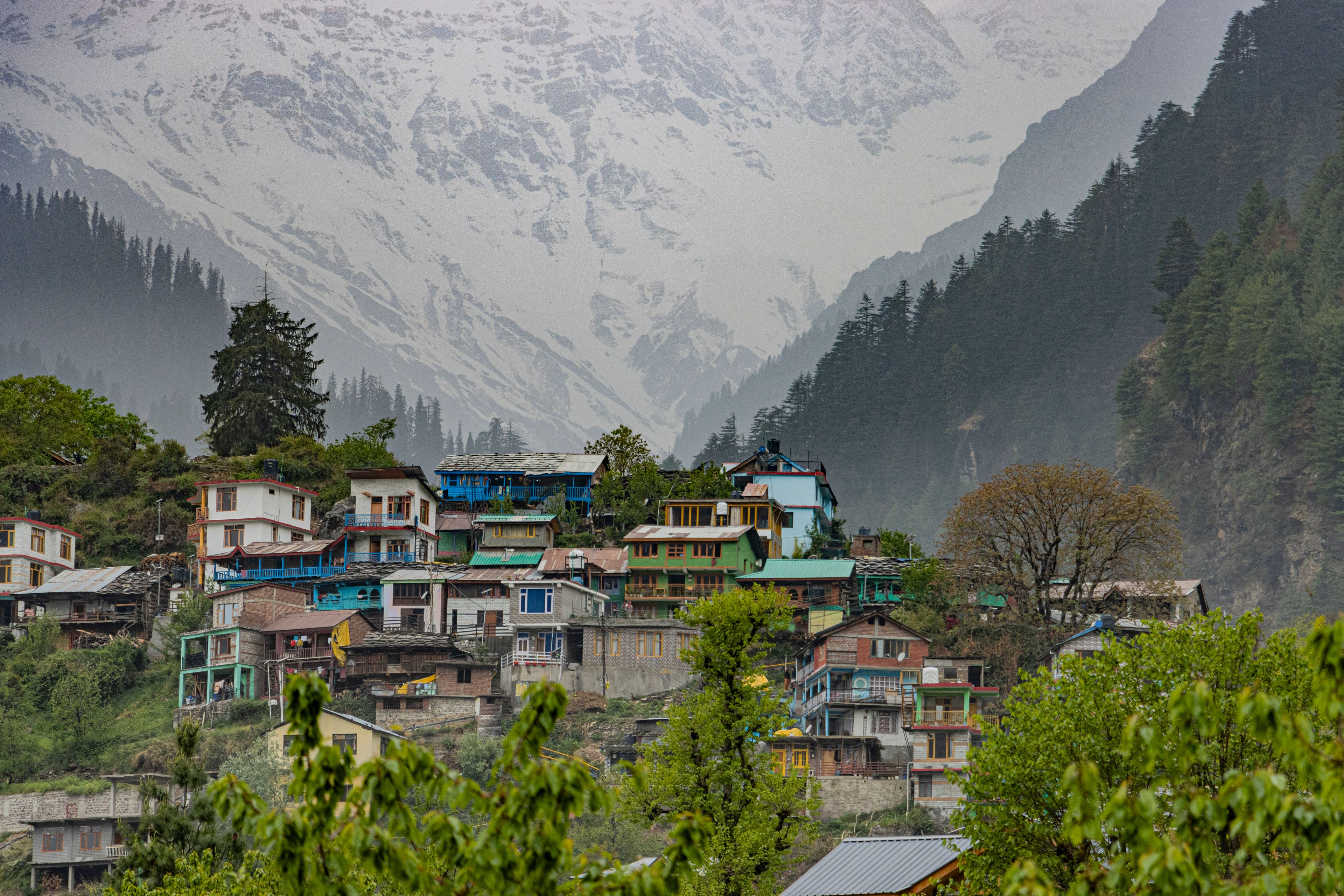
Manali sits at around 2,050 metres on the Beas river, in the upper Kullu valley, ringed by snow peaks and deodar forest. It is the best-known mountain destination in north India, a favourite for honeymooners, families, adventure travellers and backpackers. It can be busy, particularly in May and June and over winter weekends, but its setting and range of activities keep it at the top of most lists.
What Manali is like
The town has two faces. New Manali and the Mall Road area are commercial and busy, with hotels, restaurants and shops. Old Manali, across the river, is quieter and more bohemian, with cafes, guesthouses and apple orchards. Beyond the town, valleys and passes open up, with Solang Valley, Rohtang Pass and the Atal Tunnel to Lahaul within a day's reach.
What to see and do
- Solang Valley, about 14 km away, for paragliding, zorbing, skiing in winter and mountain views.
- Hadimba Devi Temple, a wooden temple in a cedar forest, built in 1553.
- Rohtang Pass and the Atal Tunnel, the high pass and the long tunnel that has transformed access to Lahaul.
- Old Manali and Vashisht, for cafes, hot springs and village walks.
- Naggar, 21 km away, with a castle, an art gallery and apple orchards.
- Kullu and Manikaran, for temples, hot springs and the Dussehra festival in October.
- Treks, such as Beas Kund and Bhrigu Lake, with registered guides.
Adventure in Manali
Manali offers paragliding, river rafting on the Beas, skiing, trekking, mountain biking and zip-lining. These are good fun when run by reputable operators, but they carry real risk. Choose registered companies, check for trained instructors and equipment standards, and cancel if weather is poor. Avoid unlicensed operators offering very low prices.
How many days
Three nights is the minimum, and four or five allows a relaxed pace with Solang, the Atal Tunnel, Naggar and a rest day. Many travellers combine Manali with Shimla or Dharamshala, which adds travel time.
When to go
March to June is the main season, with pleasant weather and open roads. September to November is clear and quiet, with golden light. December to February is snow season, and many couples choose it. July and August are wet, with landslide risk on highways.
Where to stay
Hotels near the Mall are convenient for restaurants and shopping, but noisy in season. Old Manali has guesthouses and cafes. Naggar, Prini and Jagatsukh offer quiet stays in the valley. Luxury resorts cluster on the roads towards Solang and Aleo. In winter, check heating, hot water and road access.
Getting there
The nearest railhead is Chandigarh or Kiratpur, and the nearest airports are Bhuntar (Kullu-Manali) and Chandigarh. Chandigarh to Manali is about 310 km and 8 to 9 hours, subject to traffic and landslides. Many travellers take overnight Volvo buses from Delhi. Check road conditions in the monsoon.
Local taxi rules
Local taxi unions control sightseeing to Solang, Rohtang and other points, and outside vehicles may not be allowed. These costs are paid directly and are listed as exclusions in our quotes. Rates are posted, and you should ask for the list.
A suggested day
Start with a slow breakfast, then visit Hadimba Temple while it is quiet. Drive to Old Manali for a stroll along the river and an early lunch at a cafe. In the afternoon, visit the Manu Temple or Vashisht hot springs, and return to the Mall Road at dusk for shopping and dinner. On other days, Solang Valley or the Atal Tunnel can fill a morning, so you rarely need more than two outings a day.
Food
Manali has a big choice of restaurants, from Himachali dishes and trout to Tibetan food, Israeli cafes in Old Manali and continental menus. Try siddu, trout, momos and apple-based desserts. Vegetarians eat easily.
Plan Manali with us
Manali anchors our Manali honeymoon and the Shimla Manali tour. Tell us your dates and we will advise on weather and stays.