Destination guide
Plan your time in Andaman & Nicobar
On this page 18 sections
- The Andamans at a glance
- The islands you will actually visit
- How the islands connect
- When to go
- The sea: snorkelling, diving and boat trips
- History and heritage
- Indigenous communities and responsible travel
- Food
- Where to stay
- Connectivity and money
- Safety and rules
- The Andamans for different kinds of traveller
- What the Andamans are not
- A note on the Nicobar Islands
- Practical details people forget
- Choosing your base
- Costs to expect
- How we plan Andaman trips
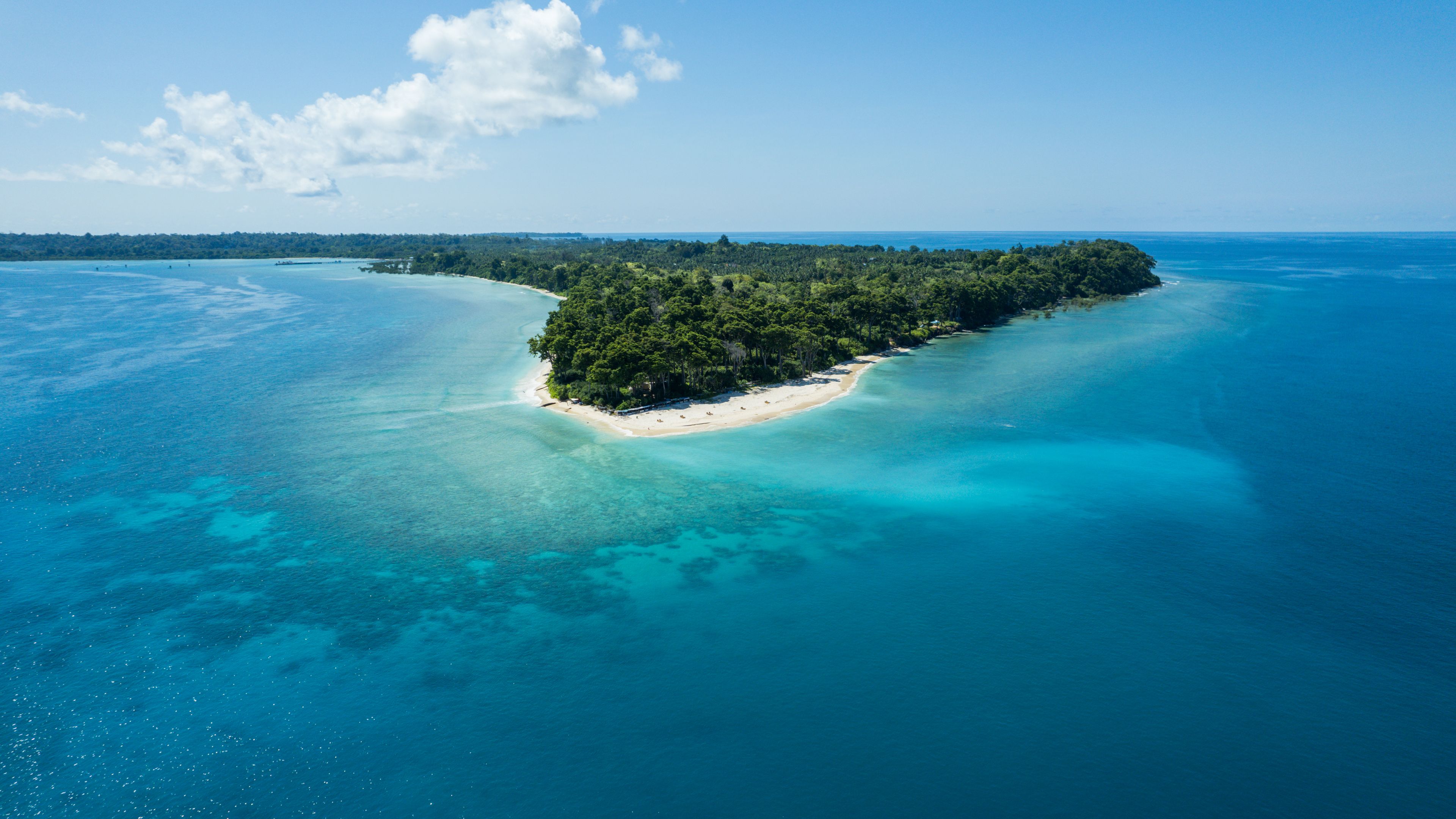
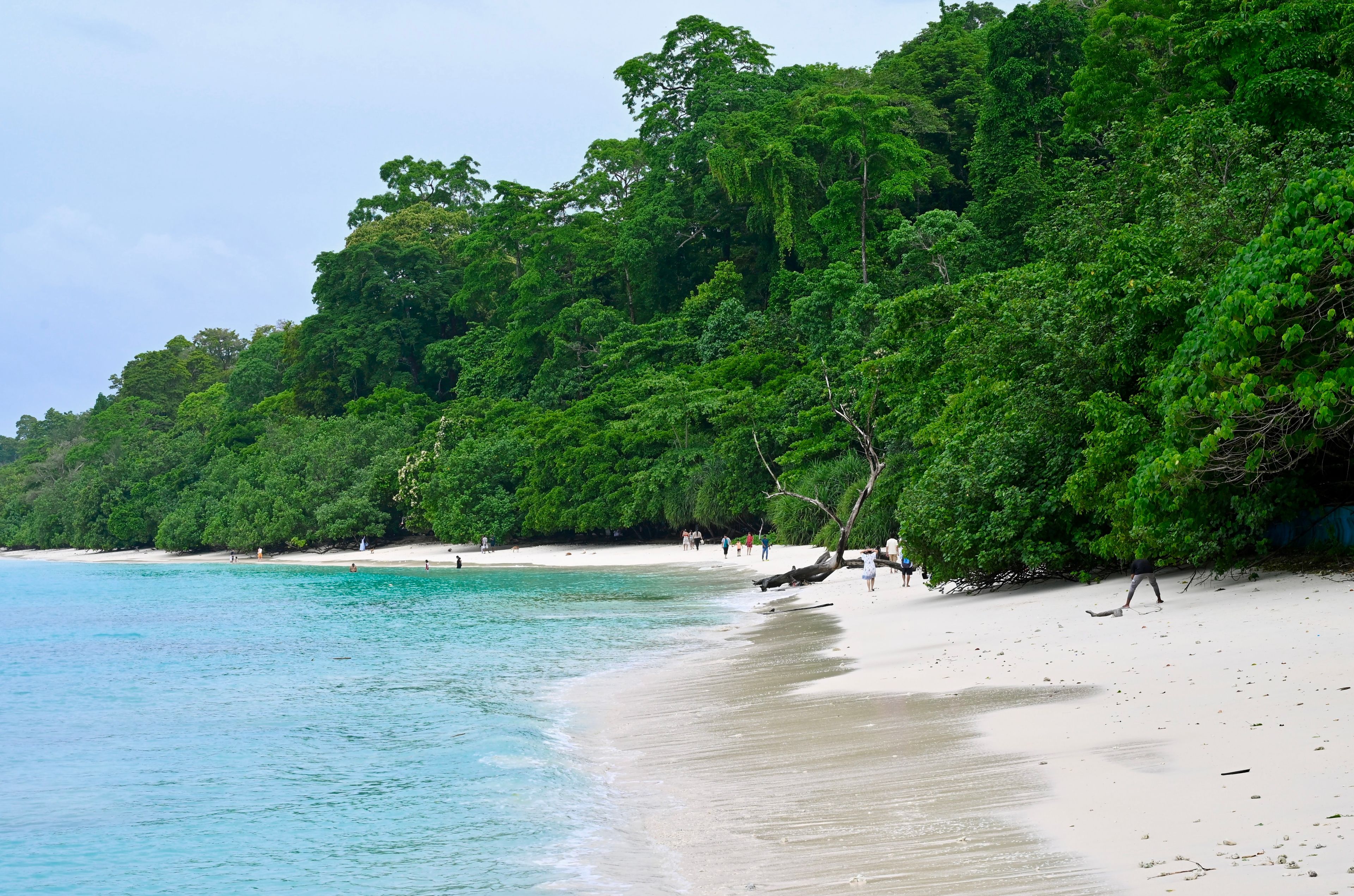
The Andaman Islands are the closest India comes to a classic tropical archipelago: white sand, turquoise shallows, coral reefs and forest that comes right down to the beach. But they are also an archipelago you need to plan for. Ferries run on weather, the islands are a flight from the mainland, facilities are simpler than in Goa or Kerala, and the rules about reefs, tribal areas and conservation are strict. The best trips are those that choose a few islands, leave slack for the sea and respect the place. This page is our working guide to the Andamans: how the islands fit together, which season suits which trip, how to handle ferries and water activities, and what to settle before you ask for a quote.
The Andamans at a glance
The Andaman and Nicobar Islands are a Union Territory of more than 500 islands in the Bay of Bengal, closer to Myanmar and Thailand than to the Indian mainland. Only a few are open to tourists, and almost all of them are in the Andaman group. The Nicobar Islands and the protected tribal reserves are closed to visitors, and for good reason: they are home to indigenous communities, including the Jarawa and the Sentinelese, who live with minimal outside contact.
The capital, Port Blair, was officially renamed Sri Vijaya Puram in 2024, and you will see both names. Three well-known islands were renamed in 2018: Havelock is now Swaraj Dweep, Neil is Shaheed Dweep and Ross Island is Netaji Subhas Chandra Bose Dweep. In practice, travellers, taxi drivers and booking sites still use Havelock, Neil and Ross most of the time.
The islands you will actually visit
- Port Blair is the gateway, with the airport, the Cellular Jail, museums and the departure point for ferries.
- Havelock Island has Radhanagar Beach, Elephant Beach, the best diving and most of the resorts.
- Neil Island is smaller and slower, with calm beaches, a natural rock bridge and easy snorkelling.
- Baratang and Middle Andaman offer limestone caves, mangrove creeks and mud volcanoes, reached by a convoy road.
- Ross Island and North Bay are quick boat trips from Port Blair, with colonial ruins and coral.
How the islands connect
| Route | Approximate distance | Usual travel time |
|---|---|---|
| Port Blair to Havelock (ferry) | about 70 km by sea | 1.5 to 2.5 hours |
| Havelock to Neil (ferry) | about 40 km by sea | 1 hour |
| Neil to Port Blair (ferry) | about 40 km by sea | 1.5 to 2 hours |
| Port Blair to Baratang (road and creek) | about 100 km | 3 hours each way |
| Port Blair to Ross Island (boat) | 3 km | 15 to 20 minutes |
| Port Blair to North Bay (boat) | about 5 km | 20 to 30 minutes |
Because ferries can be cancelled in rough seas, we plan the island hops in the early part of the trip, keep the last day in Port Blair, and avoid scheduling a flight on the same day as a ferry.
When to go
| Months | What it is like | Suits |
|---|---|---|
| November to February | Dry, calm seas, clear water, comfortable temperatures | Diving, honeymoons, beach holidays |
| March to May | Hot and humid, calm water, increased cyclone risk in April to May | Snorkelling, quieter stays |
| June to September | Heavy rain, rough seas, ferry and activity disruptions | Budget stays, only for flexible travellers |
| October | Rain eases, greener landscapes, fewer crowds | Value, shoulder-season travel |
The peak is December to January. Our best time to visit the Andamans guide covers each month, and Andaman weather month by month explains the temperatures and sea conditions.
Planner's note: If your dates fall in June to September, tell us early. We usually recommend a different destination, or a short Port Blair and Havelock plan with a resort stay and a spare day on each side for weather.
The sea: snorkelling, diving and boat trips
The reefs are the reason many people come. Snorkelling at Elephant Beach on Havelock or Bharatpur Beach on Neil is easy and rewarding. Introductory scuba dives at Havelock and Neil are suited to beginners, and certified divers will find walls, caves and wrecks. A glass-bottom boat ride at North Bay is a gentle option for children and non-swimmers.
Choose certified and insured operators with trained instructors, and expect briefings on equipment, hand signals and reef etiquette. Do not touch or stand on coral, and never collect shells or corals, which is illegal. If you dive, you must not fly for 18 to 24 hours afterwards, so plan the sequence of your last days. See the Havelock scuba guide for more.
History and heritage
The Andamans were a penal colony under British rule, and the Cellular Jail in Port Blair, completed in 1906, held freedom fighters and political prisoners. During the Second World War, the Japanese occupied the islands, and in December 1943, Netaji Subhas Chandra Bose raised the Indian tricolour at Port Blair. These layers make a visit to the Cellular Jail and Ross Island sobering and important.
Indigenous communities and responsible travel
The Jarawa, Onge, Great Andamanese and Sentinelese are among the oldest living peoples in the world. They are protected by law, and tourism must never intrude on their lives. On the road through the Jarawa reserve to Baratang, you travel in convoy, cannot stop, photograph or offer anything to the people. Visits to the Sentinelese island are prohibited and dangerous. Beyond that, responsible travel in the Andamans means looking after the reef, avoiding plastic, saving fresh water and eating local fish in season.
Food
Seafood is the star: fish curry, grilled catch, crab and prawns, often served with rice. Bengali, South Indian and North Indian dishes are common because of the settler communities. Fresh coconut, tropical fruit and chilli-spiced snacks are everywhere. Port Blair has the widest choice, and Havelock has a mix of beach shacks and resort restaurants. Vegetarians eat well in Port Blair and Havelock, but should check in advance in smaller places. Read our Andaman food guide.
Where to stay
Port Blair has hotels at all price levels, close to the airport and jetties. Havelock has beach resorts, cottages and eco-lodges, concentrated around Govind Nagar, Vijaynagar and Radhanagar. Neil has small guest houses and a few resorts. Book early for December to January, and check distance to the beach, air-conditioning, hot water and generator power. Eco-resorts often have limited facilities by design, so read the description carefully.
Connectivity and money
Mobile coverage and internet are patchy, particularly outside Port Blair. BSNL, Airtel and Jio work in some places, but speeds can be slow. ATMs are available in Port Blair and Havelock but can run out of cash. Carry enough cash for small expenses, especially on Neil. Download maps, tickets and documents before you leave.
Safety and rules
The main risks are the sea and the weather. Swim only where it is safe, follow lifeguard and boat crew instructions and avoid swimming alone. Check ferry and weather updates. Respect restricted areas and tribal reserves. Bring a copy of your photo ID, since you will be asked for it at jetties and checkpoints. Our safety guide has more.
The Andamans for different kinds of traveller
Couples and honeymooners do best with Havelock and Neil, a beachfront resort and unhurried days. Families should choose Port Blair and one island, avoid long ferry days and favour easy activities such as glass-bottom boats and calm beaches. Divers and snorkellers can build a trip around Havelock and Neil, with dives early in the stay and a rest day before flying. History lovers will find the Cellular Jail and Ross Island moving. Photographers will enjoy sunrise at Sitapur on Neil, sunset at Radhanagar and the mangrove creeks of Baratang. Senior travellers do well in Port Blair and Havelock resorts with ground-floor rooms, and should check ferry comfort and medical facilities before booking.
What the Andamans are not
It helps to arrive with the right expectations. The Andamans are not Goa: there is little nightlife, restaurants close early and the pace is slow. They are not Maldives-level luxury at Maldives prices: facilities are simpler, and power and internet can be unreliable. The beaches are beautiful, but not every one is swimmable, and some reefs have been damaged by storms and visitor pressure. They are also not a destination where you can improvise: ferries, resort rooms and flights need booking ahead. If you accept this, the islands reward you with some of the clearest water and quietest beaches in India.
A note on the Nicobar Islands
The Nicobar group, to the south, is closed to tourists. The islands are home to the Nicobarese and Shompen communities and have been protected for decades. After the 2004 tsunami, they were heavily affected, and recovery continues. You may see references to the Nicobar Islands in the name of the Union Territory, but a tourist trip to the Andamans does not include them.
Practical details people forget
Carry a government photo ID, because jetties and checkpoints ask for it. Download offline maps, tickets and documents. Carry cash for islands. Pack a small first-aid kit and any regular medicines, since pharmacies on smaller islands are limited. Bring a waterproof pouch for phones and documents. And keep one day in the plan unscheduled: the sea sometimes decides your itinerary.
Choosing your base
If you can only stay in one place, choose Havelock for the best mix of beaches, resorts and activities. If you prefer a very quiet stay, Neil is calmer. If you want history and easy day trips, Port Blair is more convenient. Most travellers combine two or three, but a single-island trip, with one ferry each way, can be the most relaxing way to experience the Andamans.
Costs to expect
Costs depend on the season, the resort category and how many ferry hops you take. Flights are a large part of the budget. Ferry tickets, scuba dives, entry fees and meals are often paid locally. See our Andaman trip cost guide for how a quote is built.
How we plan Andaman trips
We start with a conversation about who is travelling, what you want to do on the water and which season you will be there. Then we propose a route with realistic ferry timings, name the resorts and activity operators, and write down inclusions and exclusions. You review the quote, change what you like and confirm only when it works. There is no fee to start. Browse our Andaman tour packages, read the first-time visitor guide, or share your dates and group and we will draft a plan.