Short answer
Goa is warm all year. Winters are dry, sunny and comfortable, summers are hot and humid, and the monsoon from June to September brings heavy rain and rough seas. Daytime temperatures range from about 27 to 35 degrees Celsius throughout the year.
On this page 11 sections
Goa has a tropical climate, which means warm temperatures all year and a clear split between a dry season and a wet one. Humidity is a constant companion on the coast, and the sea is warm enough for swimming for most of the year, though conditions vary. This guide gives typical ranges, not forecasts, so you can plan clothes and activities sensibly.
Month by month
| Month | Daytime high (approx.) | Rain | What it feels like |
|---|---|---|---|
| January | 31 to 32 °C | Very little | Dry, sunny, pleasant evenings |
| February | 32 to 33 °C | Very little | Dry, warm, calm sea |
| March | 33 to 34 °C | Very little | Hot afternoons, humid |
| April | 34 to 35 °C | Very little | Hot and humid |
| May | 33 to 35 °C | Pre-monsoon showers | Very humid, thundery late in the month |
| June | 30 to 31 °C | Heavy | Monsoon onset, rough sea |
| July | 28 to 29 °C | Very heavy | Wettest month |
| August | 28 to 29 °C | Heavy | Wet and green |
| September | 29 to 31 °C | Moderate | Rains easing |
| October | 32 to 33 °C | Occasional | Humid, rains tapering |
| November | 33 °C | Little | Dry, comfortable evenings |
| December | 32 °C | Little | Dry, slightly cooler nights |
Night temperatures range from around 20 to 22 °C in winter to 25 to 27 °C in the hot months.
The seasons in detail
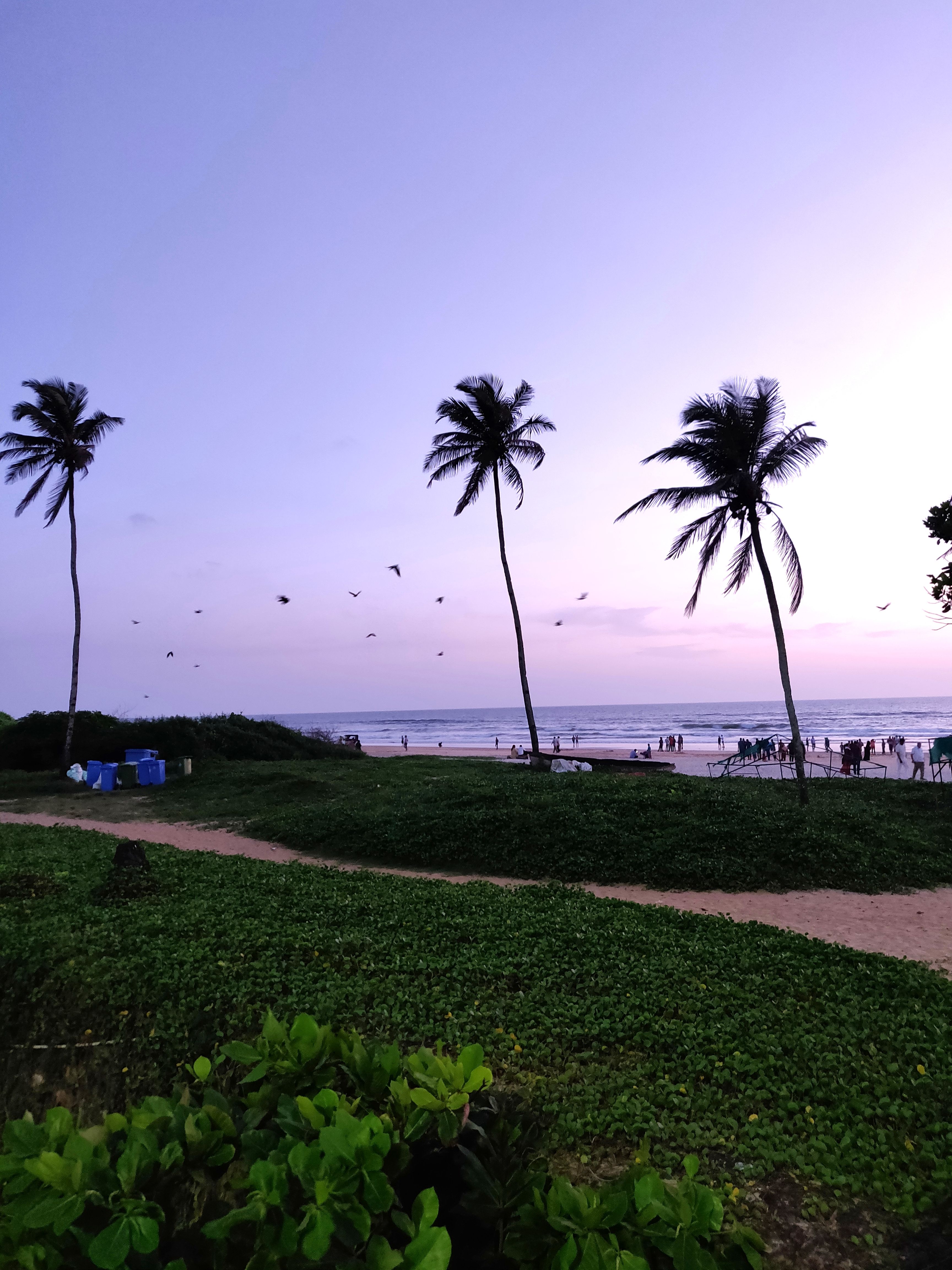
Winter (November to February). Clear skies and light breeze make the coast comfortable. Sea water is warm and relatively calm. This is the best time for being outdoors from morning to night.
Summer (March to May). Heat builds, particularly inland. Mornings and evenings are the best time for walks, and afternoons are for the pool or a siesta. The sea is calm and clear, and the beaches are quiet.
Monsoon (June to September). The south-west monsoon arrives in early June and is heavy through July and August. The sea can be violent, with big waves and strong currents, and beach swimming is unsafe. Rain can last for days, and electricity or road disruptions happen. By September the rain eases and the countryside is at its greenest.
Sea and swimming conditions
From October to May the sea is generally suitable for swimming at lifeguarded beaches, with calmest conditions in the winter months. Rip currents can occur at any time, so follow the flags. In the monsoon, red flags mean no swimming. Water sports operators suspend activity during this period.
Humidity, sea temperature and daylight
Goa's humidity stays high all year, often above 70 per cent, and feels heavy in April, May and the monsoon. Sea temperature stays between about 27 and 30 degrees Celsius, so swimming is comfortable whenever it is safe. Daylight lasts around eleven to thirteen hours through the year, with sunrise before 6.30 am in summer and sunset between 5.45 pm and 7 pm depending on the season. In winter, evenings cool slightly but remain warm enough for shorts and shirts.
Storms and weather alerts
The Arabian Sea occasionally produces cyclonic storms, usually in May to June or October to November. These are tracked by the India Meteorological Department, and warnings are issued well in advance. If an alert is in force, follow local instructions, avoid the beach and stay indoors. Heavy rain can also cause flash floods on small roads and landslides on hill sections, so check updates before long drives.
What the weather means for your plans
- Morning outings are best in March to May, to avoid the heat.
- Sightseeing in Old Goa and Panaji is comfortable in winter and manageable in the rain with an umbrella.
- Spice plantations and waterfalls are best in and just after the monsoon.
- Dudhsagar runs when the jeep safari is open, generally from October.
- Beach days are best from November to March.
Weather and activities at a glance
| Activity | Best weather window | Notes |
|---|---|---|
| Swimming and beach days | November to March | Always check flags |
| Water sports | October to April | Suspended in monsoon |
| Sightseeing in Old Goa and Panaji | November to February | Start early |
| Cycling and walking | Early mornings, December to February | Heat builds fast |
| Spice farm and waterfall visits | September to February | Wet and green |
| Photography | Golden hour year-round | Monsoon skies are dramatic |
Heat and health
April and May can feel oppressive, with high humidity and little breeze. Drink water regularly, wear light cotton, schedule outdoor activities for the early morning or evening and rest in the afternoon. Watch for signs of heat exhaustion, such as dizziness, headache and heavy sweating, and cool down in shade or air conditioning. Children and older travellers need extra care.
A note on microclimates
Inland areas such as Ponda, Mollem and the Western Ghats foothills are slightly cooler at night and wetter in the monsoon than the coast, while Panaji and the river towns feel stickier because of the estuaries. If you plan a day trip to Dudhsagar or a spice farm, carry a light jacket and a rain layer even in the dry season, because forest shade and morning mist can feel surprisingly cool.
Packing
Light, breathable clothing, swimwear, a hat, sunglasses and sunscreen for most of the year. A light jacket or wrap for air-conditioned spaces and winter evenings. In the monsoon, add a rain jacket, quick-dry clothing, waterproof bag covers and sandals with grip.
Planning around the weather
If the weather turns bad on a beach trip, shift to heritage, markets, cafes or a spa day. Keep your itinerary flexible in the monsoon, and book hotels with a pool and covered dining. For choosing dates, read the best time to visit Goa. For a tailored plan, send us your dates.
Practical tips
- Pack light cotton clothing, sunscreen and a hat for most of the year.
- Carry a rain jacket and quick-dry clothes if you travel between June and October.
- Check sea conditions and lifeguard flags every time you swim, whatever the season.
- Plan outdoor sightseeing in the morning from March to May.
- Expect humidity to be high even in winter on the coast.