On this page 9 sections
Pushkar is a small pilgrim town built around a sacred lake, with whitewashed ghats, temples and a bazaar that serves both devotees and backpackers. Ajmer, 15 km away, is a larger city with one of India's most important Sufi shrines. Together they form a spiritual stop that works well between Jaipur and Jodhpur, and the town is famous for the Camel Fair every November.
Pushkar
According to tradition, Pushkar Lake formed where Lord Brahma dropped a lotus flower. The town has more than 50 ghats, around 400 temples and a strong pilgrim culture. Bathing in the lake is considered especially auspicious on Kartik Purnima in November.
Pushkar Lake and the ghats. At sunrise and sunset, the ghats are filled with bathers, priests and lamps. Take off your shoes, dress modestly and follow local etiquette. Photography of bathers is not appropriate.
The Brahma Temple. One of very few temples dedicated to Brahma in India, with a red spire and a marble floor inscribed with devotees' names. See the dedicated attraction guide for details.
Savitri Mata Temple. On a hill above the lake, reached by a steep walk or a ropeway, with views over Pushkar at sunrise or sunset.
The bazaar. Colourful, crowded and full of textiles, silver, bangles, rose products and snacks.
Rules and etiquette
Pushkar is a holy town, so the sale and consumption of alcohol, meat and eggs are banned within its limits. Dress modestly, remove shoes at ghats and temples and respect the sanctity of the lake. At the ghats, some priests approach visitors and offer a ritual in return for a donation. You can politely decline, and if you do take part, agree the amount before you start.
The Pushkar Camel Fair
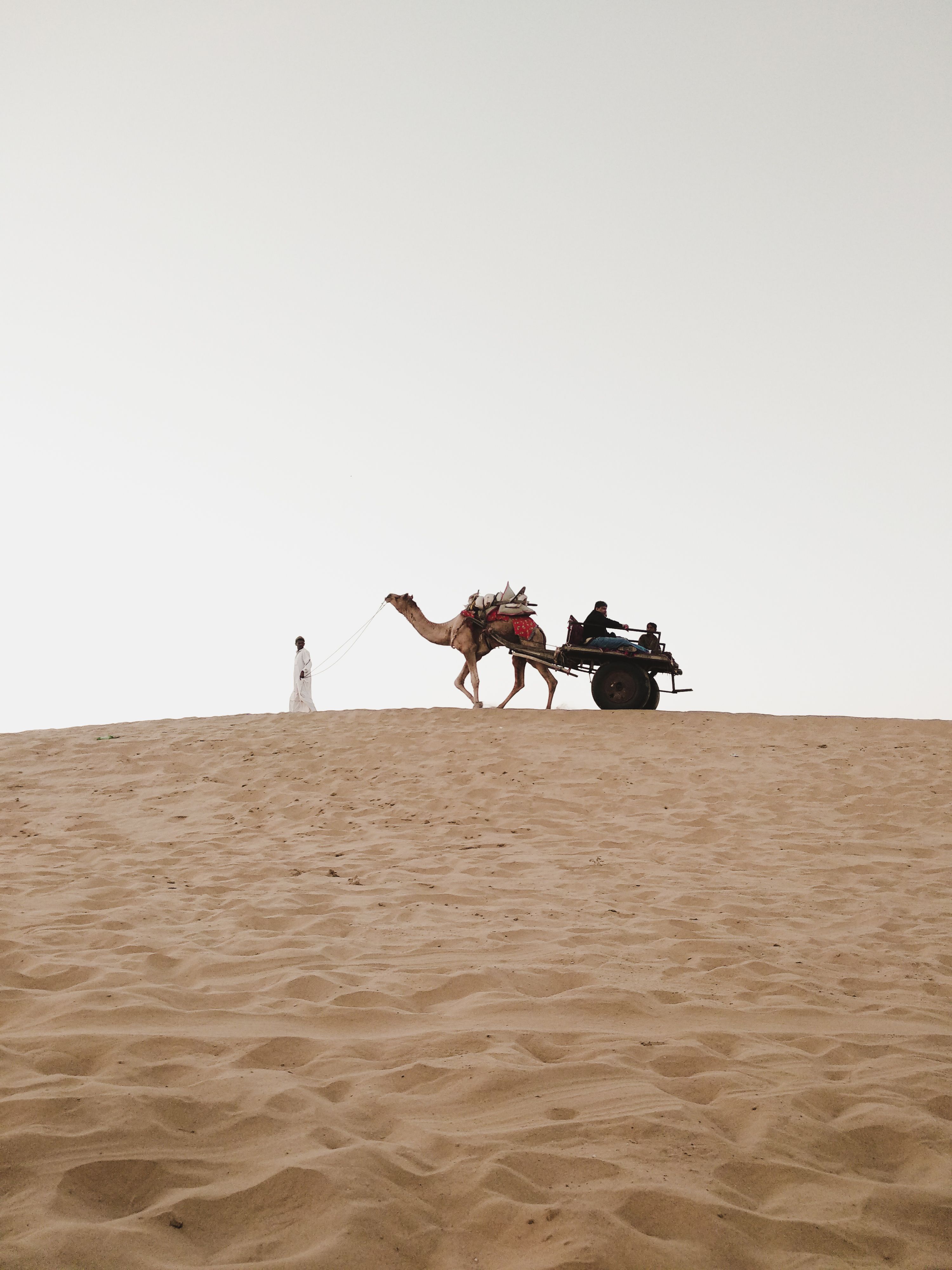
The fair is held in the month of Kartik, usually in November, and is one of Rajasthan's biggest events. Thousands of camels, horses and cattle are traded, and the town fills with pilgrims, traders, musicians, photographers and tourists. In 2026 it was expected to run from about 17 to 24 November, with the holy dip on Kartik Purnima. Dates are confirmed locally each year. Book hotels months ahead, expect crowds and enjoy the cultural events, which include competitions and folk performances.
Ajmer
Ajmer's main attraction is the Dargah of Khwaja Moinuddin Chishti, one of the most revered Sufi shrines in South Asia. Pilgrims of all faiths come to offer flowers and prayers. Cover your head, dress modestly and remove shoes. The Adhai Din Ka Jhonpra, a twelfth-century mosque with intricate arches, is nearby, and Ana Sagar lake and Taragarh Fort are popular viewpoints.
How long to stay
A single night in Pushkar is enough for most travellers, with a sunset at the ghats, a morning at the temple and a visit to Ajmer on the way out. Two nights allow a more relaxed pace and an optional camel ride at sunset. During the fair, three nights are common.
Getting there
Pushkar is about 145 km from Jaipur (three hours by road) and 15 km from Ajmer, which has a railway station served by fast trains from Delhi and Jaipur. There is no railway station at Pushkar itself, so most visitors arrive by road from Ajmer or Jaipur.
Where to stay
Pushkar has heritage havelis, small hotels and guesthouses around the lake, and luxury tented camps outside town during the fair. The lakefront areas are lively; the outskirts are quieter.
Food
Pushkar is entirely vegetarian, with cafes serving Indian, Israeli and continental dishes. Malpua with rabri is a local sweet. Rose products and rose sherbet are popular.
Plan with us
Pushkar fits on the route from Jaipur to Jodhpur, as in our Royal Rajasthan circuit. See the 7-day Rajasthan itinerary, or tell us your plan.