On this page 8 sections
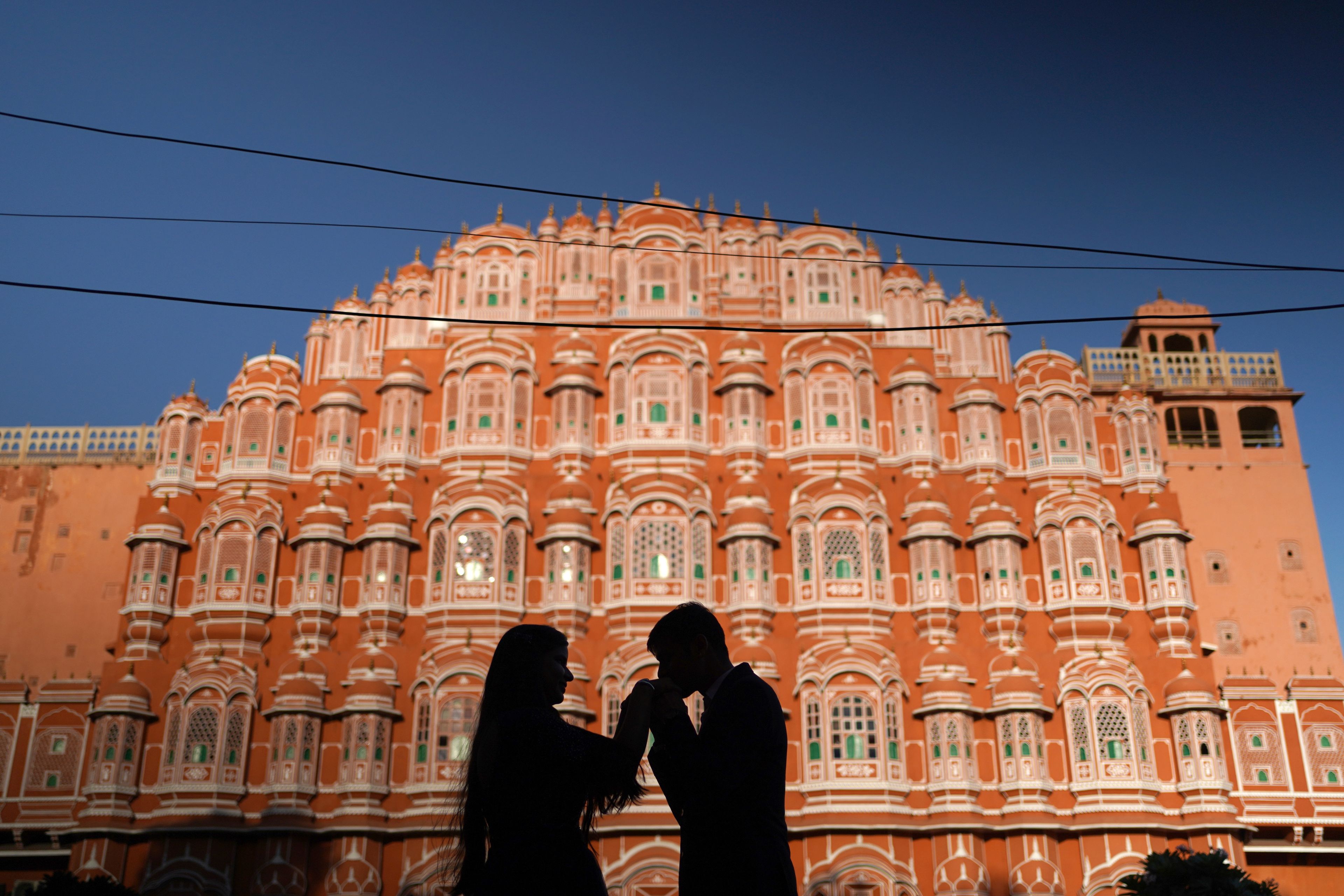
Hawa Mahal is the building most people mean when they say "Jaipur". Its five-storey pink and red sandstone facade, with 953 small windows or jharokhas, curves along a busy road in the old city. It looks like a screen more than a palace, and that is part of the story: it was built so that women of the royal household could watch street life and festivals without being seen.
History in brief
Maharaja Sawai Pratap Singh had Hawa Mahal built in 1799, and the architect is traditionally named as Lal Chand Ustad. The design is a mix of Rajput and Mughal elements, with arched windows and latticework. The honeycomb pattern also helps air flow through the building, which is where the name Palace of Winds comes from.
The view from outside
Most of the drama is on the street side. The best views are from the cafes and rooftop restaurants across the road, which give a clear view of the whole facade. Mornings are best, when the sun lights the pink sandstone and the traffic is lighter. The sunrise light is warm and the colour is richest.
Going inside
The interior is smaller and plainer than the exterior. You enter from the rear through a courtyard and climb ramps, not stairs, to the upper levels. The rooms are narrow, with small windows that frame views of the street and City Palace. There is a small museum with displays on Jaipur's history. A visit typically takes 30 to 45 minutes. If you are short on time, seeing the facade from across the road is enough.
Tips for visiting
- Go early, around opening time, to avoid crowds and heat.
- Cafes opposite the palace offer good views but check prices before sitting.
- Watch for touts and sellers on the street. A polite refusal is enough.
- Take care with traffic; the road is busy.
- The structure is old and some staircases are narrow, so go slowly with children and elders.
Combine it with
Hawa Mahal is a short walk from the City Palace and Jantar Mantar. The bazaars of Johari and Tripolia lie nearby, and a walk through the old city from Hawa Mahal is a pleasant way to see Jaipur's everyday life. Allow a morning for the old city and an afternoon for Amer or the forts.
Seasons and festivals
The facade is photogenic year-round, though winter mornings give the clearest light. Festivals such as Teej and Gangaur fill the old city with processions and music, and the area becomes crowded.
Is it worth going in?
If you have limited time, the outside view is the priority and the inside is optional. If you are interested in architecture and the history of the royal household, go in and combine it with the City Palace museum.
Plan it with us
Hawa Mahal is included in our Jaipur sightseeing on every plan. See the Golden Triangle or ask us to design a custom Jaipur day.