On this page 7 sections
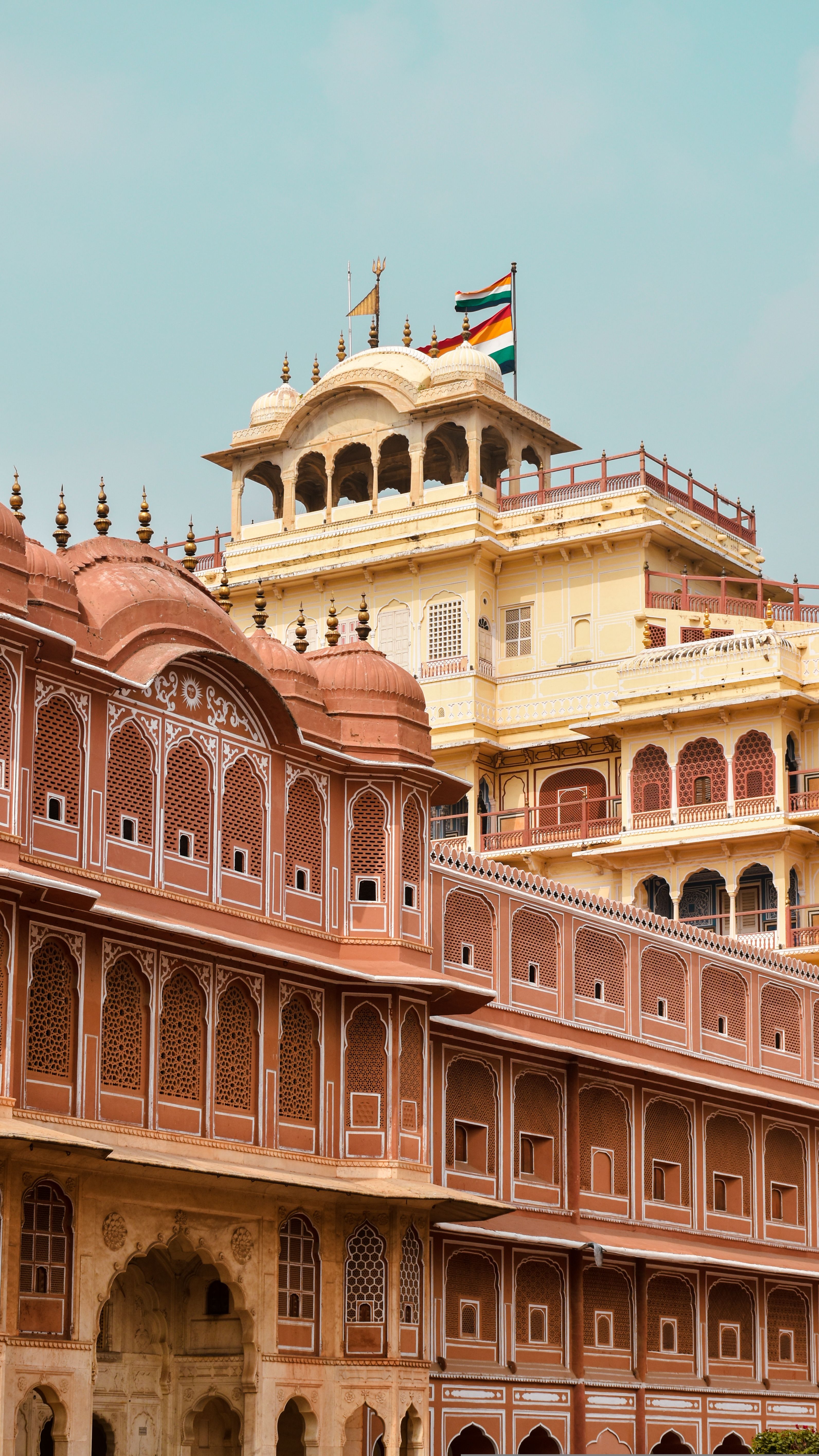
The City Palace sits at the centre of old Jaipur and is the most layered of the city's sights. Started by Sawai Jai Singh II in the 1720s as the heart of his new capital, it is a complex of courtyards, pavilions and gateways, part museum and part royal residence. The royal family still lives in part of it, and the flag atop the Chandra Mahal tells you whether the Maharaja is in residence.
What you will see
- Mubarak Mahal. A nineteenth-century reception hall that now holds the textile and costume galleries, with royal garments, shawls and embroidered pieces.
- Maharani's Palace. Now an armoury, with a collection of swords, daggers and firearms, some beautifully decorated.
- Diwan-i-Khas. The Hall of Private Audience, which holds two massive silver urns recorded as among the largest silver objects in the world, made for a royal journey to England.
- Peacock Gate. One of four ornate gates in the Pritam Niwas Chowk, richly decorated with peacock motifs.
- Chandra Mahal. The seven-storey residence, partly open to visitors on a separate ticket, with interiors that show how the family lives.
- Art gallery. Paintings, manuscripts and artworks from the royal collection.
Tickets and guides
The City Palace has several ticket categories, from basic entry to access to the Chandra Mahal and guided tours. Compare options at the ticket counter. A guide is useful because the museum labels are brief, and official guides display ID. An audio guide is a good alternative. Photography is allowed in most areas, though some galleries restrict it.
How long to allow
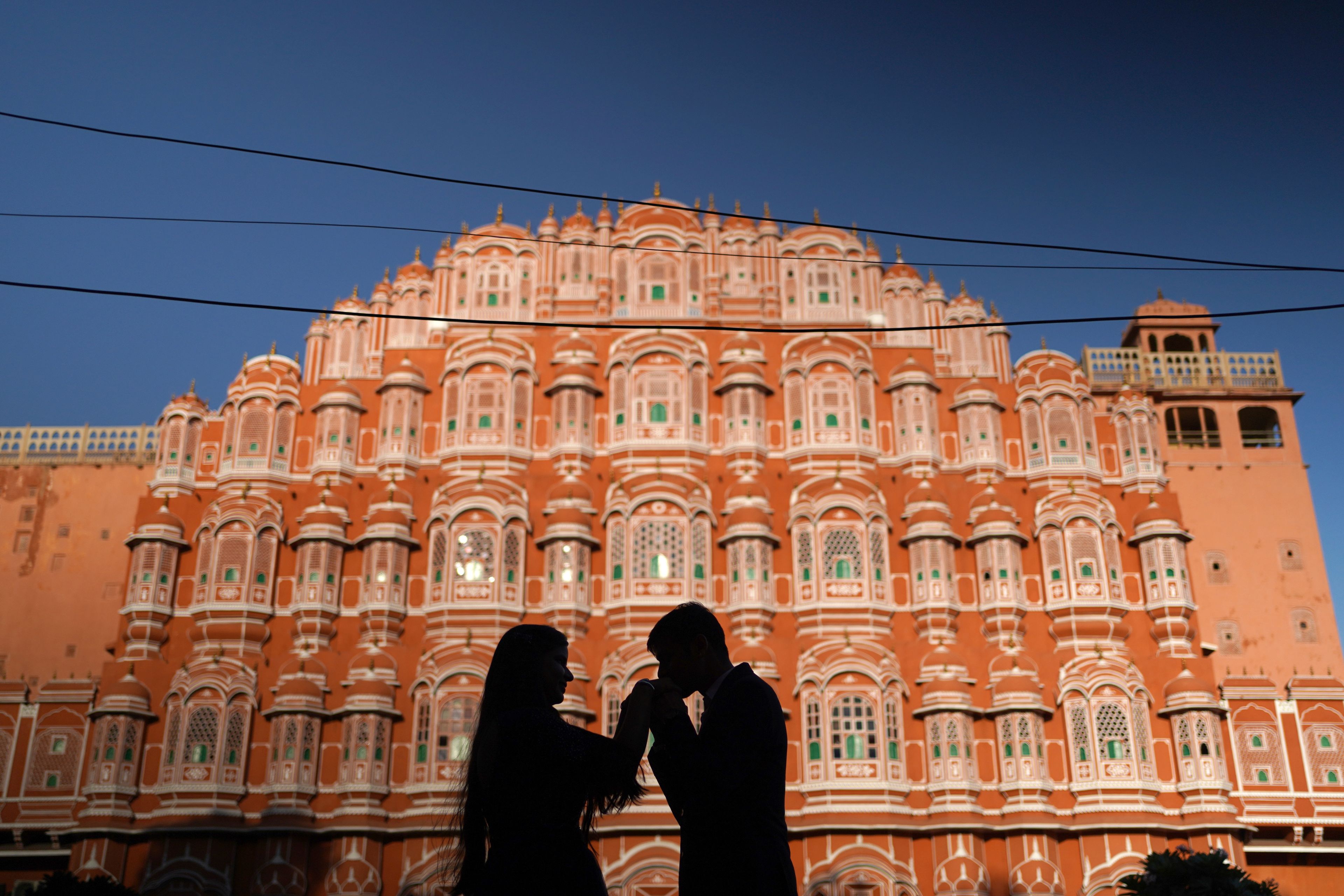
Plan about two hours for the museum and courtyards, three if you add the Chandra Mahal. It pairs well with Jantar Mantar next door and a walk to Hawa Mahal in the same morning.
Tips for visiting
- Go as soon as it opens to avoid group tours.
- Wear comfortable shoes for the stone floors.
- Carry water and a light scarf for air-conditioned galleries.
- Be wary of people near the entrance offering "free" guides or special passes.
- Ask whether the gallery you want is open, as some rooms close for maintenance.
Why it matters
The City Palace shows how a Rajput court lived: the ceremonies, the textile traditions, the arms and the relationship with the British and the Mughal court. It also shows how heritage can survive when a palace stays inhabited. Compared with Amer Fort, it is more about interiors and objects than about landscape and defence.
Combine it with
The adjacent Jantar Mantar is a UNESCO World Heritage Site with giant stone instruments for measuring time and the positions of stars. Together they make a satisfying half-day. After lunch, walk the Johari and Bapu bazaars.
Plan it with us
The City Palace features in all our Jaipur plans. Read the Jaipur guide or ask us for a custom day.