On this page 9 sections
Har Ki Pauri, meaning "the steps of the Lord", is the best known ghat in Haridwar and one of the holiest in India. According to tradition, a drop of the nectar of immortality fell here during a cosmic battle, which is why the Kumbh Mela is held at Haridwar. Pilgrims come to bathe in the river, to scatter ashes of relatives and to attend the evening aarti, a spectacle that draws thousands every night.
What it looks like
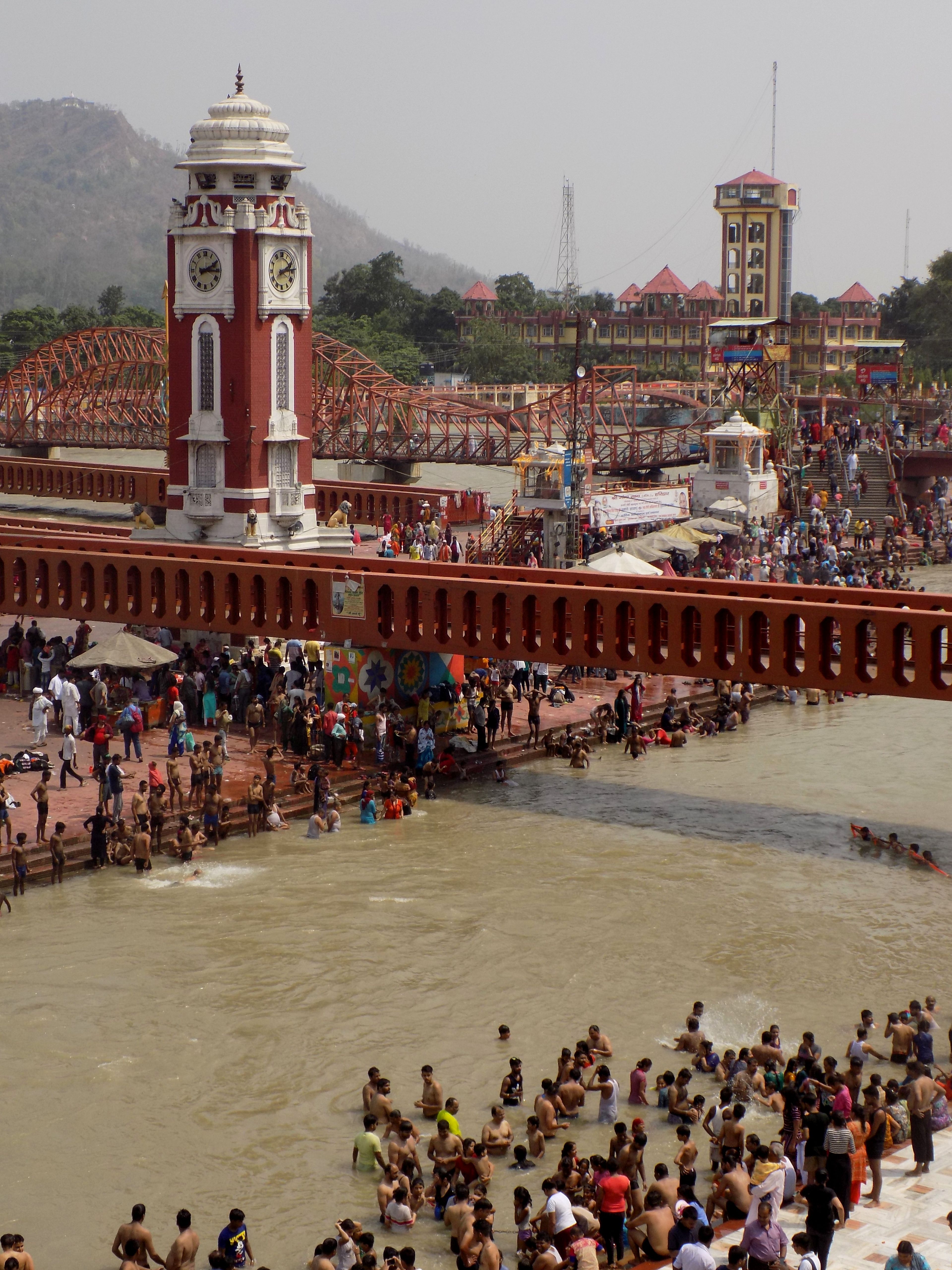
A wide set of steps leads down to a channel of the Ganga, with temples, a clock tower and small shrines on the banks. Throughout the day, you see pilgrims bathing, priests conducting rituals and families offering flowers. A footbridge crosses the channel, and the ghat is lined with shops selling lamps, flowers and sweets. At the centre stands the Brahma Kund, said to be the spot where the nectar fell.
The evening aarti
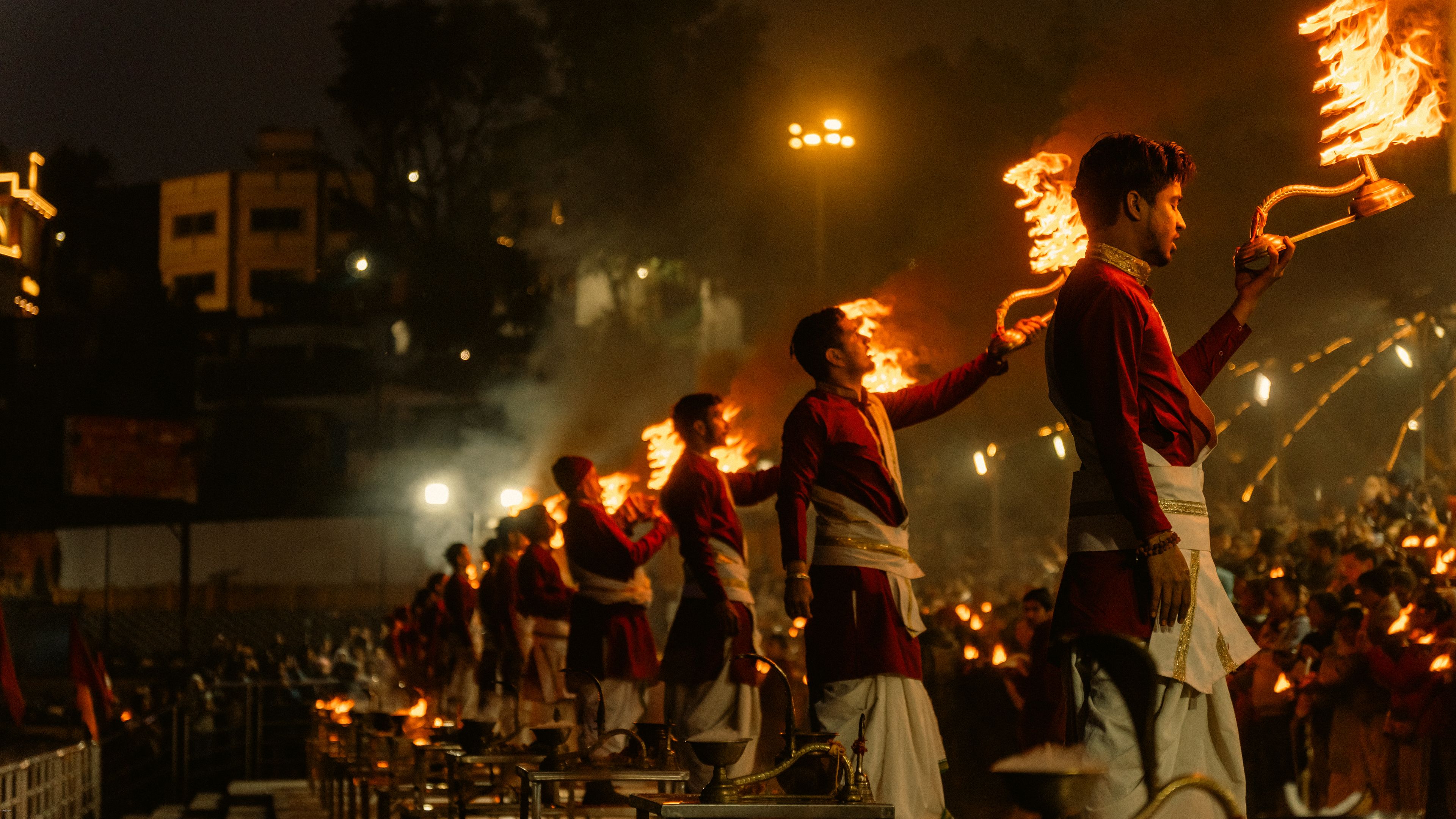
At sunset, the ghat is lit with lamps, and priests lift towering brass lamps while chanting hymns and ringing bells. Devotees float small leaf boats with flowers and lamps on the water, and the river seems to glow with hundreds of moving flames. The sound of a crowd singing together, and the sight of the lights, make it memorable even for people who do not share the faith.
When to arrive
The aarti takes place around sunset, so the start time shifts through the year. Arrive 45 to 60 minutes early for a place on the steps. Weekends, festivals and the summer pilgrim season are especially crowded, and in peak periods you may have to stand. Some areas are reserved for specific groups, and the police direct the crowd.
Bathing etiquette
Many pilgrims bathe in the river as an act of purification. If you wish to bathe, use the shallow, chained areas, keep valuables with a trusted person, and dress modestly (many people bathe in clothes). Currents can be strong, particularly after rain, and accidents occur. Women often use covered changing areas. Do not use soap or shampoo in the river.
Respectful behaviour
- Dress modestly, covering shoulders and knees.
- Take off shoes before the steps.
- Keep your voice low during prayers.
- Do not photograph people bathing without permission.
- Avoid public displays of affection.
- Dispose of flowers and leaf cups in the designated bins.
- Politely decline touts who pressure you to perform paid rituals.
Safety and accessibility
The crowds can be intense. Hold children's hands, keep bags in front of you and avoid carrying valuables. The steps are wet and slippery, with limited railings. Wheelchair access is limited, though some areas can be reached. Emergency services and police are present during the aarti.
Practical tips
- Eat lightly before the aarti and drink water.
- Carry small notes for offerings.
- Use a bag that closes securely.
- Wear easy-to-remove footwear.
- Plan a taxi or e-rickshaw for after the aarti, as roads fill up.
- Visit in the morning too, when the ghat is calmer and the light is soft.
Who it suits
Pilgrims, culture lovers and photographers will get the most from it. Families can enjoy it with care for the crowds. It is less suited to people who dislike crowds or have difficulty standing for long periods.
Combine it with
Pair Har Ki Pauri with the Mansa Devi ropeway and a market stroll. See the Haridwar guide, our Uttarakhand classic tour or ask us to plan.