On this page 9 sections
Naini Lake is the reason Nainital exists. A pear- or eye-shaped body of water around 1.5 km long, it sits in a basin among hills and has shaped the town's life since the colonial era. According to legend, the lake formed where the eye of the goddess Sati fell, which is why the temple of Naina Devi stands on its northern shore. Today it is the centre of every visit.
What the lake is like
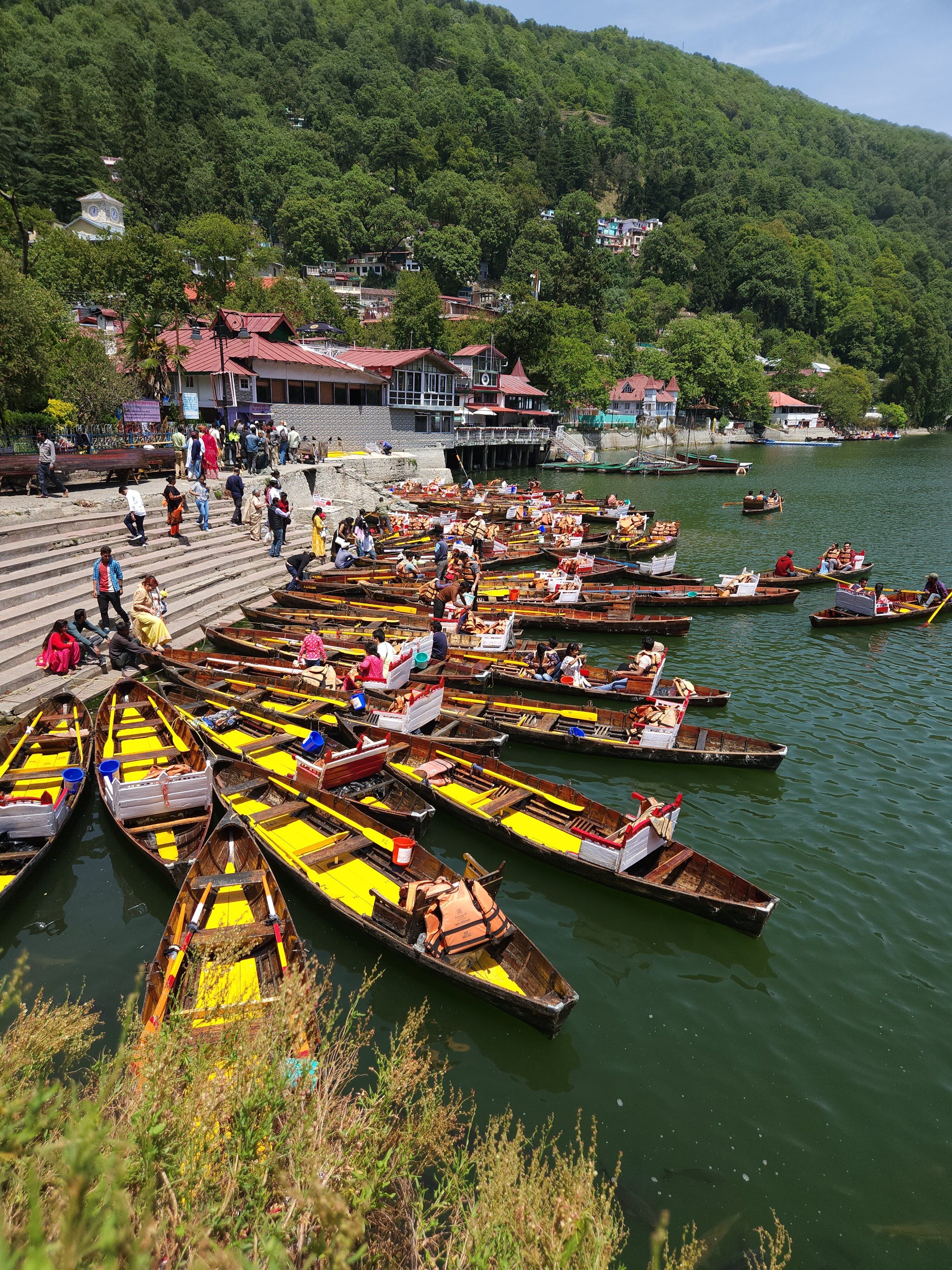
The lake is a deep green or grey-blue, depending on the light. A walkway runs around it, with the Mall Road on the north side. Tourist boats cross the water, from rowing boats to paddle boats and sailing boats. In the early morning, the lake is quiet and still, with mist and birdsong. By midday, the Mall fills with people, and horns, music and hawkers take over. Sunset gives a gentle light on the water and hills.
Boating
Boating is the main activity. Options include rowing boats (hired with a boatman), paddle boats and, at times, sailing boats. Boats are run by local associations, with fixed rates for a half-hour or hour. Wear the life jacket provided, and do not overload the boat. Do not stand up or rock the boat. Boating is paused in rough weather, and in winter some services may be limited. Agree the fare and duration before boarding, and ask for a receipt if one is offered.
The Mall Road walk
The lakeside walk is flat and pleasant, with benches, souvenir shops and views. The full circuit takes about an hour at an easy pace. It is best in the early morning or at dusk. Look for woollens, candles, wooden crafts and sweets. The Mall is usually closed to vehicles near the central stretch, but traffic can be heavy elsewhere.
Naina Devi Temple
On the northern shore, the temple is a small shrine that attracts many pilgrims, especially during the annual fair in the Navratri period. It is modest in size, with colourful decorations and a lively atmosphere. Remove shoes, dress modestly and expect queues in busy periods.
Conservation and the lake's condition
The lake is fed by springs and rainfall, and its water level varies with the seasons. It has faced pollution, encroachment and water-level concerns over the years, and local authorities and citizens' groups work to protect it. Visitors can help by not littering, avoiding plastic, and refusing to feed fish with packaged snacks.
Best time to visit
March to June is pleasant. October to December has clear weather and quieter lakes. January and February can be very cold, with mist. The monsoon brings heavy rain, and the lake level rises. Early mornings and evenings are the best times in any season.
Practical tips
- Visit early on weekends to avoid crowds.
- Wear a jacket in the evening, since the breeze off the water is cold.
- Carry small notes for boats and snacks.
- Keep an eye on children near the edge.
- Avoid buying packaged food to feed fish or birds.
- Combine the lake with the cable car to Snow View Point.
Who it suits
Families, couples and first-time hill station visitors. It is less suited to those who dislike crowds, unless they visit early.
Combine it with
Pair the lake with Snow View Point and a day trip to Bhimtal and Sattal. See the Nainital guide, our Nainital and Corbett tour or ask us to plan.