On this page 8 sections
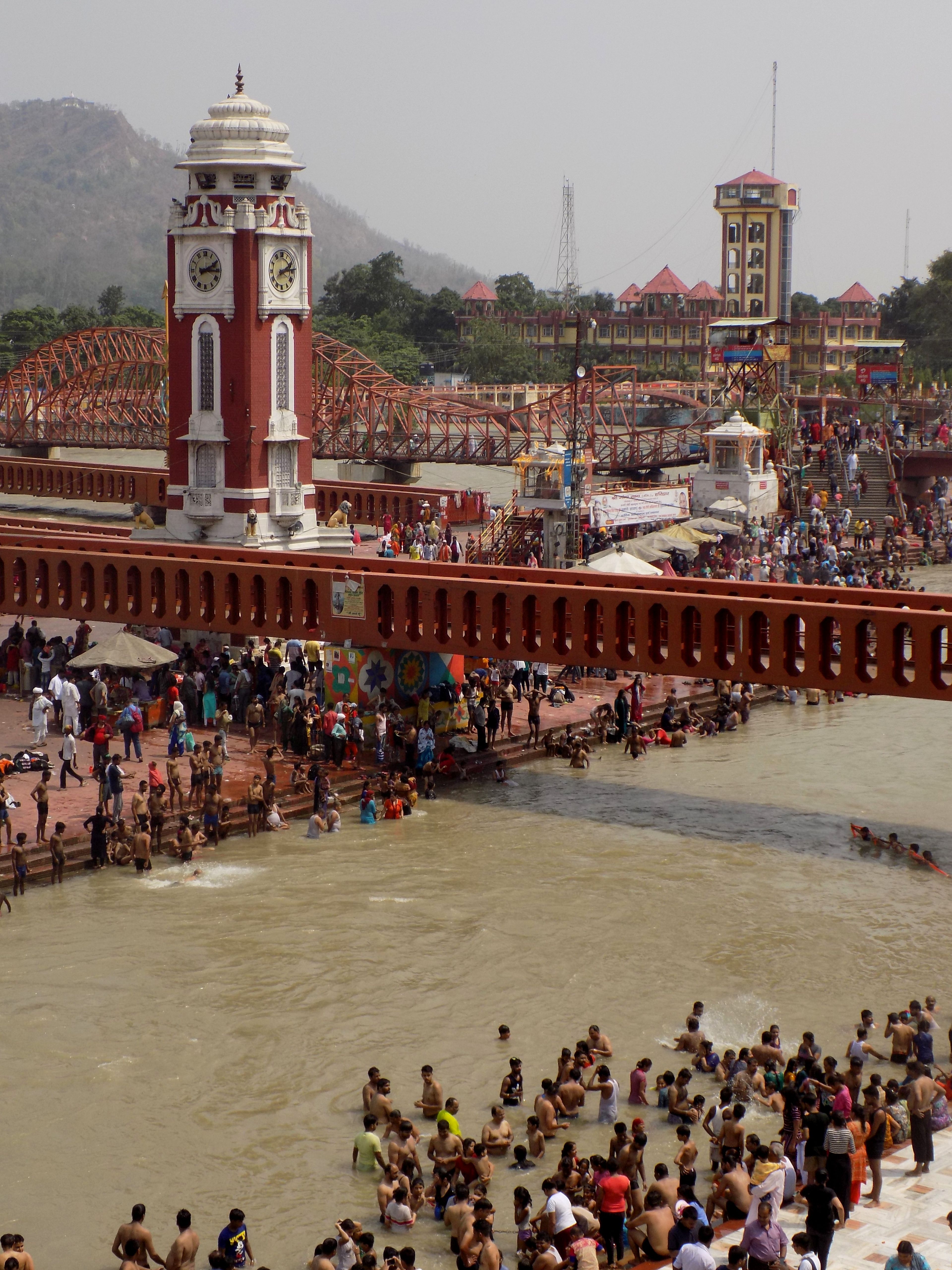
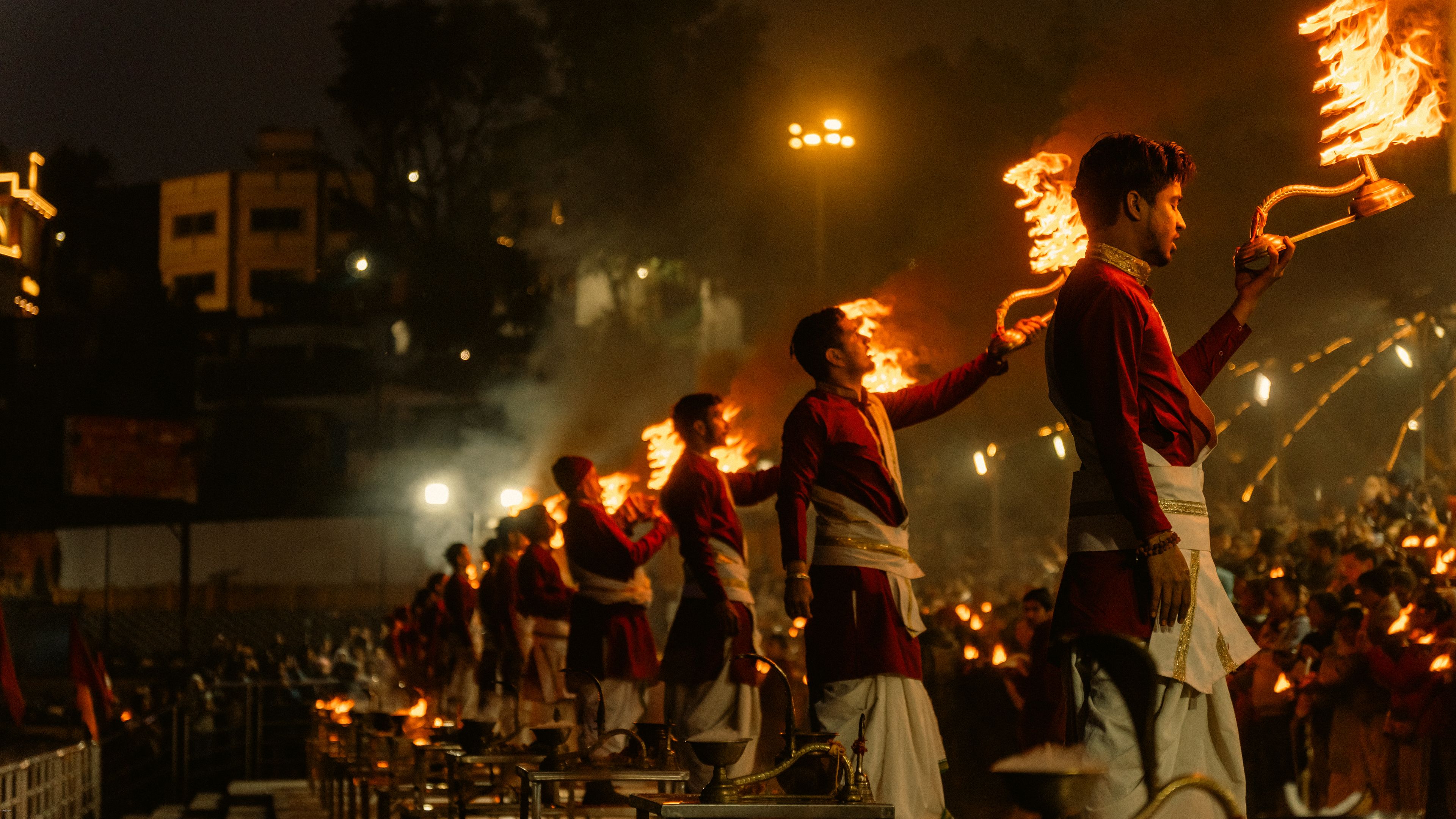
Triveni Ghat is the main bathing and ritual ghat in Rishikesh, and each evening it becomes the stage for the Ganga aarti. Priests stand on the steps with large brass lamps, chanting hymns to the river, while devotees and visitors sit on the stairs and by the water. Smaller bowl-shaped lamps float away on the current. The scene is simple and moving, and it is one of the most popular things to do in town.
What the aarti is
Aarti is a devotional ritual in which lamps are waved before a deity. In Rishikesh, the deity is the Ganga herself, considered a living goddess. The ceremony includes prayers, bells, chanting and offerings of flowers and ghee lamps. Compared with Haridwar's larger gathering, it feels calmer and more intimate, although it can still be crowded in the season. Other ghats and ashrams, including Parmarth Niketan on the opposite stretch, also hold their own evening ceremonies, which have a slightly different atmosphere.
What you will see
- Priests in saffron robes performing the rituals on the steps.
- Singing and hymns, often with harmonium and drums.
- Leaf cups with marigolds and a flame, offered to the river.
- Families, pilgrims, foreign visitors and local residents sitting together.
- The river itself, dark and fast, with lamps drifting past.
Timing and getting a seat
The aarti is held around sunset, so the start time moves with the seasons, earlier in winter and later in summer. Arrive about 30 to 45 minutes before the start to find a place on the steps. Weekends, festivals and holidays are far busier. If you prefer quiet, ask your hotel about smaller ashram ceremonies, or visit on a weekday.
Etiquette
- Dress modestly, covering shoulders and knees.
- Remove footwear before the steps near the water.
- Be quiet during the prayers, and keep phones on silent.
- Ask before photographing priests or people at prayer.
- Do not step into the river without a local guide, because currents are strong.
- Put offerings in the designated places, and avoid littering. Plastic and polythene harm the river.
- Politely refuse anyone who pressures you for money.
Safety
The ghat is crowded, with wet steps and a steady current. Keep a hand on young children, take care of valuables, and do not lean over the edge to take photographs. Monkeys are common and may snatch food. In the monsoon, the river rises, and access to some steps may be closed.
Who it suits
Almost everyone: pilgrims, families, couples and solo travellers. It is a quiet, free and memorable way to spend an evening, and suits all ages, though the steps can be tiring for older visitors.
Practical tips
- Wear comfortable, slip-resistant footwear that is easy to remove.
- Bring a light shawl for cool evenings.
- Carry small change for offerings.
- Keep phone photography discreet.
- Plan dinner afterwards at a vegetarian cafe nearby.
- Do not schedule a late rafting trip on the same evening.
Combine it with
Pair the aarti with a walk across Ram Jhula at sunset and dinner by the river. See the Rishikesh guide, our Uttarakhand classic tour, or ask us to plan your visit.